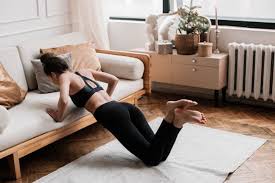
Home Workout To Lose Weight
Effective home workouts for weight loss involve combining cardio and strength training. Focus on compound movements that use multiple muscle groups. Consistency is key; aim for at least 30 minutes most days of the week.
Proper nutrition plays a huge role alongside exercise for best results.
Understanding Home Workouts for Weight Loss
Weight loss really comes down to using more energy than you consume. Exercise helps you use more energy. You can burn calories at home.
You don’t need expensive equipment to do it. Your own body weight is a powerful tool. Many exercises use it to build strength.
They also get your heart rate up. This burns calories. Getting your heart rate up is called cardio.
Cardio exercises are great for burning fat.
Strength training is also very important. It builds muscle. Muscle uses more energy than fat.
This means even when you are resting, you burn more calories. So, a mix of cardio and strength is best. Many home workouts combine these two.
This makes them very efficient. You work more muscles at once. You get a good sweat going.
It feels productive.
The goal is to create a calorie deficit. This means burning more calories than you eat. Exercise is one side of the coin.
Eating healthy foods is the other. You can’t out-exercise a bad diet. But you can make weight loss much easier with both.
This guide will focus on the exercise part. We’ll give you ideas for moves you can do. We’ll help you understand why they work.
My First Attempt at Home Weight Loss
I remember when I first decided I wanted to lose some weight. I looked around my small apartment. There were no big machines.
I felt a bit lost. I decided to try some online videos. Some were okay.
Others felt too hard or too easy. I remember one video that promised “fast results.” It was a dance workout. I tried it one evening.
I was sweating so much I could barely see the screen. My arms were aching. My legs felt like jelly.
I thought, “This is it! I’m going to get thin!”
After that one session, I was so sore. I couldn’t even walk down the stairs easily the next day. I took a few days off because of the soreness.
Then I tried another video. It was a yoga class. It was calming, but I didn’t feel like I burned many calories.
I felt frustrated. I wasn’t seeing the fast results I wanted. This went on for a while.
I’d try a new thing, get sore, rest, then feel unmotivated. It wasn’t sustainable for me. I realized I needed a simpler, more consistent approach.
Something I could stick with even when I wasn’t feeling super energetic. That’s when I started looking into basic bodyweight exercises and cardio moves that didn’t need fancy equipment.
Core Principles of Home Weight Loss Workouts
1. Calorie Burn: Exercises should elevate your heart rate to burn calories effectively.
2. Muscle Engagement: Work major muscle groups to boost metabolism.
3. Consistency: Regular workouts yield better results than sporadic intense sessions.
4. Progressive Overload: Gradually increase the difficulty to keep challenging your body.
5. Enjoyment: Choose activities you like to make it a habit.
Key Workout Types for Weight Loss at Home
To lose weight effectively at home, you need a balanced approach. This means mixing different types of exercise. It keeps your body guessing.
It also works different parts of your body. You’ll see better, more complete results. Let’s look at the main types.
Cardiovascular Exercise (Cardio)
Cardio is your best friend for burning calories. It gets your heart pumping. This uses a lot of energy.
The more energy you use, the more calories you burn. You can do cardio in many ways at home. Jumping jacks are a classic.
High knees are great too. Running in place works. Dancing is also fantastic cardio.
Even cleaning your house with energy burns calories. The goal is to keep your heart rate elevated for a set period.
Aim for at least 30 minutes of cardio most days of the week. If you’re just starting, you can begin with shorter sessions. Maybe 15 or 20 minutes.
Then, gradually increase the time. You can also increase the intensity. This means doing the moves faster or adding more challenging variations.
Examples of Home Cardio:
- Jumping Jacks
- High Knees
- Butt Kicks
- Mountain Climbers
- Burpees (can be modified)
- Dancing to music
- Stair Climbing (if you have stairs)
- Shadow Boxing
Cardio Quick-Scan Table
| Exercise | How to Do It | Weight Loss Benefit |
|---|---|---|
| Jumping Jacks | Start standing, jump feet apart while raising arms overhead. Jump back to start. | Full body, raises heart rate fast. |
| High Knees | Run in place, lifting knees high towards chest. Pump arms. | Targets legs and core, great cardio boost. |
| Mountain Climbers | Start in plank. Bring one knee to chest, then switch legs rapidly. | Works core, shoulders, and legs. Intense calorie burner. |
Strength Training with Bodyweight
Strength training is vital for weight loss too. It builds muscle. Muscle tissue burns more calories than fat.
Even at rest, more muscle means a higher metabolism. You don’t need weights to build strength. Your own body weight is enough to start.
Bodyweight exercises work your muscles against gravity.
Think about exercises like squats, lunges, push-ups, and planks. These moves use multiple muscles at once. They are called compound movements.
They are very efficient. They work your arms, legs, chest, back, and core all at once. This helps you build overall strength and muscle.
Examples of Bodyweight Strength Moves:
- Squats
- Lunges (forward, backward, side)
- Push-ups (on knees or toes)
- Plank
- Glute Bridges
- Crunches
- Supermans
- Triceps Dips (using a chair)
Strength Training: Myth vs. Reality
Myth
Strength training makes women bulky.
You need heavy weights to build muscle.
Strength training is only for young people.
Reality
Building bulky muscle is very hard for women without specific training and diet.
Bodyweight exercises can build significant strength and muscle definition.
It’s beneficial for all ages to maintain muscle mass and bone density.
High-Intensity Interval Training (HIIT)
HIIT workouts are very popular for weight loss. They involve short bursts of very intense exercise. These are followed by brief rest periods.
A typical HIIT workout might be 20–30 minutes long. But it can burn a lot of calories. It also helps to boost your metabolism for hours after the workout.
This is called the “afterburn effect.”
You can do HIIT at home using bodyweight exercises. You can combine cardio moves. For example, you might do 30 seconds of burpees.
Then rest for 15 seconds. Then do 30 seconds of high knees. Rest for 15 seconds.
Repeat this cycle for several rounds. It’s a great way to get a lot done in a short amount of time.
It’s important to start slowly with HIIT. If you are new to exercise, try longer rest periods. Or do shorter work intervals.
Listen to your body. HIIT is intense. It’s not meant to be done every single day.
Give your body time to recover in between.
HIIT Example Circuit
Perform each exercise for 40 seconds, followed by 20 seconds of rest. Repeat the circuit 3-4 times.
- Jumping Jacks
- Squats
- Push-ups (on knees or toes)
- High Knees
- Plank
Putting Together Your Home Workout Plan
Having a plan makes a big difference. It helps you stay on track. It also ensures you are working out effectively.
You don’t need a complicated plan. A simple routine can be very powerful. The most important thing is consistency.
Frequency and Duration
For weight loss, aim to move your body most days of the week. This doesn’t mean an hour-long intense workout every day. It can be 30 minutes of brisk walking in your neighborhood.
Or 20 minutes of a home cardio video. Or a 40-minute strength session.
A good starting point is 3-4 days of structured workouts. These could be bodyweight strength training. Or a HIIT session.
Mix in 2-3 days of moderate cardio. This could be dancing or brisk walking. Allow at least one full rest day per week.
Your body needs time to recover and rebuild. Overtraining can lead to injury and burnout.
Structuring Your Week
You can create a weekly schedule. For example:
- Monday: Bodyweight Strength Training
- Tuesday: Cardio (e.g., brisk walk, dance video)
- Wednesday: HIIT Workout
- Thursday: Active Recovery (light walk, stretching)
- Friday: Bodyweight Strength Training
- Saturday: Longer Cardio Session or Fun Activity (like a long bike ride if possible, or just a vigorous clean-up!)
- Sunday: Rest
This is just an example. Adjust it to fit your life. If you have more time on weekends, do longer workouts then.
If you can only fit in 20 minutes on weekdays, that’s perfectly fine. The key is to make it happen regularly.
Warm-up and Cool-down
Never skip your warm-up and cool-down. A warm-up prepares your body for exercise. It increases blood flow to your muscles.
This helps prevent injuries. Do 5-10 minutes of light cardio. This could be jogging in place, arm circles, and leg swings.
A cool-down helps your body recover. It brings your heart rate down slowly. It also helps reduce muscle soreness.
Spend 5-10 minutes stretching. Focus on the major muscle groups you used. Hold each stretch for 20-30 seconds.
Static stretching is best after your workout.
Workout Plan Example for a Week
Focus: General Weight Loss & Fitness
Monday: Full Body Strength
- Warm-up (5 min)
- Squats: 3 sets of 12-15 reps
- Push-ups (on knees or toes): 3 sets of as many as possible (AMRAP)
- Lunges: 3 sets of 10-12 reps per leg
- Plank: 3 sets, hold for 30-60 seconds
- Glute Bridges: 3 sets of 15-20 reps
- Cool-down & Stretch (5-10 min)
Tuesday: Cardio Blast
- Warm-up (5 min)
- Choose a 30-minute cardio video (dance, kickboxing, aerobic) OR do your own mix: Jumping Jacks, High Knees, Butt Kicks, Mountain Climbers for 30 seconds each, rest 15 seconds, repeat for 30 min.
- Cool-down & Stretch (5-10 min)
Wednesday: Active Rest or Light Activity
- Gentle walk for 20-30 minutes
- Or light stretching and foam rolling
Thursday: HIIT Workout
- Warm-up (5 min)
- HIIT Circuit (e.g., 40 sec work / 20 sec rest for 4-5 rounds): Burpees, Jump Squats, Plank Jacks, High Knees, Bicycle Crunches.
- Cool-down & Stretch (5-10 min)
Friday: Full Body Strength (Slight Variation)
- Warm-up (5 min)
- Deadlifts (bodyweight, focus on form) or Good Mornings: 3 sets of 12-15 reps
- Incline Push-ups (using a sturdy chair or table): 3 sets AMRAP
- Walking Lunges: 3 sets of 10-12 reps per leg
- Side Plank: 3 sets, hold for 30 seconds per side
- Superman: 3 sets of 15-20 reps
- Cool-down & Stretch (5-10 min)
Saturday: Longer Cardio / Fun Activity
- Choose something you enjoy for 45-60 minutes. This could be a longer walk, a bike ride, or even active gardening.
Sunday: Rest Day
- Complete rest or very light stretching.
Making Progress and Staying Motivated
Weight loss is a journey. There will be ups and downs. It’s important to celebrate your progress.
And to find ways to stay motivated. Even small wins are worth noting.
Tracking Your Progress
How do you know if you are making progress? It’s not just about the number on the scale. While that can be a guide, it’s not the whole story.
Muscle weighs more than fat. So, you might gain muscle and lose fat, and the scale doesn’t change much. But your clothes will fit better.
You’ll feel stronger. You’ll have more energy.
Try these methods to track progress:
- Measurements: Measure your waist, hips, arms, and thighs every 2-4 weeks.
- How Clothes Fit: Notice if your pants are looser or if you can button them more easily.
- Strength Gains: Can you do more push-ups? Hold a plank longer? Do more squats?
- Energy Levels: Do you feel more energetic throughout the day?
- Fitness Performance: Can you do exercises with better form or for longer periods?
- Photos: Take progress pictures every 4-6 weeks. Sometimes the visual change is most striking.
Don’t get discouraged if progress is slow. Everyone is different. Your body responds at its own pace.
The most important thing is to keep going.
Tips for Staying Motivated
Motivation can be tricky. Some days you’ll jump out of bed, ready to go. Other days, the couch will feel very inviting.
Here are some ideas to keep your motivation up:
- Set Realistic Goals: Don’t aim to lose 50 pounds in a month. Aim for 1-2 pounds per week.
- Find a Workout Buddy: Even if they live far away, you can check in with each other.
- Create a Dedicated Space: Have a corner of your home set up for workouts. It signals to your brain that it’s time to exercise.
- Music and Podcasts: Create a killer playlist. Listen to podcasts that inspire you.
- Reward Yourself: Plan non-food rewards for reaching milestones. A new book, a massage, or a movie night.
- Focus on How You Feel: Remember the energy boost you get after a workout. The feeling of accomplishment.
- Don’t Aim for Perfection: Missed a workout? It’s okay. Just get back on track with the next one.
- Variety is Key: Try new exercises or videos. This keeps things interesting and challenges your body in new ways.
Progress Tracking Snapshot
Track these metrics to see your home workout success:
- Weight: (Weigh yourself once a week, same day, same time)
- Waist Circumference: (Measure around the narrowest part of your waist)
- Energy Levels: (Rate your daily energy from 1-5)
- Workout Completion: (Did you stick to your planned workouts for the week?)
Nutrition’s Role in Home Weight Loss
While this guide is about workouts, it’s crucial to mention nutrition. You cannot out-exercise a poor diet. Eating healthy foods is essential for weight loss.
It provides the fuel your body needs for workouts. It also helps you create the calorie deficit needed to lose fat.
Focus on whole, unprocessed foods. This means fruits, vegetables, lean proteins, and healthy fats. Drink plenty of water.
Limit sugary drinks, processed snacks, and excessive saturated fats. Think of your diet as supporting your exercise efforts. The two work together for the best results.
When to Seek Professional Help
While home workouts are great, there are times when you might need more. If you have any underlying health conditions, talk to your doctor before starting a new exercise program. They can give you personalized advice.
They can tell you what’s safe for you.
If you experience persistent pain, stop exercising and consult a medical professional. Also, if you are struggling with motivation or finding it hard to stick to a plan, a certified personal trainer can help. They can create a custom plan for you.
They can provide guidance and accountability. They can help you achieve your weight loss goals safely and effectively.
Frequently Asked Questions About Home Workouts for Weight Loss
How long does it take to see results from home workouts for weight loss?
Results vary for everyone. You might start feeling stronger in a week or two. Clothes might fit better in 3-4 weeks.
Visible weight loss often takes 4-8 weeks of consistent effort. Remember that weight loss is a journey, not a race.
What is the best home workout for burning belly fat?
There’s no single exercise that targets belly fat specifically. Spot reduction isn’t real. However, a combination of cardio and full-body strength training, along with a healthy diet, will help reduce overall body fat, including around the abdomen.
Core exercises like planks and crunches help strengthen the abdominal muscles.
Do I need any equipment for home workouts to lose weight?
No, you don’t need special equipment to start. Your body weight is a powerful tool. You can use household items like chairs or water bottles for added resistance if you wish.
As you progress, you might consider simple items like resistance bands or a yoga mat.
How often should I do HIIT workouts for weight loss?
HIIT is intense. It’s best to do it 2-3 times per week. Allow at least one day of rest between HIIT sessions.
Your body needs time to recover. You can do other forms of exercise on your non-HIIT days.
Can I lose weight just by doing strength training at home?
Strength training is excellent for building muscle, which boosts your metabolism. However, for significant weight loss, it’s usually best combined with cardio. Cardio burns more calories during the workout itself.
The combination of both is highly effective for burning fat and building a lean physique.
What if I have joint pain? Can I still do home workouts?
Yes, you can. Focus on low-impact exercises. These include walking in place, swimming if you have access, or cycling if you have a stationary bike.
Modified bodyweight exercises, like doing squats with less depth or push-ups on your knees, can also be helpful. Always listen to your body and consult a doctor or physical therapist for guidance.
Conclusion
Getting in shape and losing weight at home is achievable. You have the power within you and your own body. By combining cardio, strength training, and consistency, you can make real progress.
Remember to fuel your body well and be patient with yourself. Celebrate every step of your journey. You’ve got this!

Related Posts
Quick Workout Before Work
15 Minute Home Workout