Home Workout For Tight Spaces
Creating an effective home workout space is possible in small areas. Focus on bodyweight exercises, compact equipment, and smart storage. You can achieve fitness goals without a large gym by using creative strategies and choosing versatile tools.
This approach makes consistent exercise accessible for everyone, regardless of their home size.
What Makes a Home Workout Space “Tight”?
A “tight” space is any area where you can’t easily move around. Think small bedrooms, cozy apartments, or even a corner of your living room. It means you might bump into furniture.
You might not have room for big machines. The floor space might be limited. This can make you feel stuck.
It’s hard to do jumping jacks or lunges. It feels like your options are very few. But they aren’t!
We just need to think differently.
The main issue is usually clearance. Can you extend your arms fully? Can you move your legs without hitting a wall or a table?
Can you lie down flat on the floor? If the answer is “maybe” or “no,” your space is likely tight. It doesn’t mean you can’t exercise.
It means you choose exercises that fit. It means you pick gear that folds or stores easily. It means you use vertical space.
It means you get creative with what you have.
Often, it’s about mindset. We see a small room and think “no gym here.” But the goal is movement. The goal is health.
A small area doesn’t stop that. It just guides how we do it. It asks us to be more efficient.
It asks us to focus on the body’s own power. Many excellent exercises require almost no equipment. They require only your body and a little bit of floor space.
My First Small Space Workout Struggle
I remember when I first moved into a tiny studio apartment. My old routine involved a big yoga mat and lots of sprawling movements. Suddenly, my living room floor was the only option.
I wanted to do my usual circuit. But my couch was too close. My coffee table was right in the way.
I tried to do a burpee. My hands hit the edge of my rug. I tried to do jumping lunges.
I almost smacked my knee on the wall.
Frustration set in fast. I felt like my fitness was being held back by my apartment walls. I sat down, feeling defeated.
My big, comfy couch seemed to mock my efforts. The limited floor space felt like a cage. I thought, “Maybe I’ll just wait until I have more room.” That thought was dangerous.
It would have stalled my progress. It was an excuse I couldn’t afford to keep.
Then, I looked around. I saw the walls. I saw the doorframe.
I saw my own body. I realized I was focusing on what I couldn’t do. I needed to focus on what I could do.
I started simple. What needs just a few feet? Push-ups.
Squats. Planks. These could all happen in a small footprint.
That was the turning point. It wasn’t about having a big space. It was about using the space I had wisely.
Your Small Space Workout Essentials
Key Items for Tight Areas:
- Resistance Bands: Light, portable, and offer great variety.
- Jump Rope: Excellent cardio that takes up minimal space.
- Yoga Mat: Provides cushioning and defines your workout zone.
- Foldable Equipment: Think foldable benches or adjustable dumbbells.
- Doorway Pull-Up Bar: Uses vertical space effectively.
Bodyweight Exercises: Your Small Space Champions
Bodyweight exercises are your best friend in a tight space. They use your own weight for resistance. You don’t need fancy machines.
You don’t need a lot of equipment. You can do them almost anywhere. Your living room, your bedroom, even a hotel room.
They build strength, endurance, and flexibility.
Let’s talk about some basics. Squats are fantastic. You stand with your feet hip-width apart.
Lower your hips as if sitting in a chair. Keep your chest up. Then stand back up.
This works your legs and glutes. It needs very little space. You just need enough room to lower yourself down and back up.
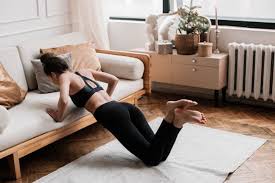
Push-ups are another great one. Start in a plank position. Your hands are under your shoulders.
Lower your chest towards the floor. Keep your body in a straight line. Then push back up.
If this is too hard, you can do them on your knees. This targets your chest, shoulders, and arms. You only need enough space to lie down and push up.
Lunges are also good. Step forward with one leg. Lower your hips until both knees are bent at about 90 degrees.
Make sure your front knee stays over your ankle. Push off your front foot to return to the start. You can do these walking or stationary.
Stationary lunges are perfect for small spaces. You just step and return, taking up very little forward or backward room.
Planks are amazing for your core. Get into a push-up position but rest on your forearms instead of your hands. Keep your body in a straight line from head to heels.
Hold this position. It works your abs, back, and shoulders. It needs only the space you occupy.
Jumping jacks can be modified. If you have enough room to move your arms and legs slightly, you can do them. If not, try “step jacks.” You step one foot out to the side while raising your arms, then bring it back.
Alternate sides. This gives you cardio without the big jump.
Quick Scan: Bodyweight Moves for Small Homes
| Exercise | Muscles Worked | Space Needed |
|---|---|---|
| Squats | Legs, Glutes | A few feet |
| Push-ups (on knees or toes) | Chest, Arms, Shoulders | Enough to lie down |
| Stationary Lunges | Legs, Glutes | A few feet per leg |
| Plank | Core, Back | Your body length |
| Glute Bridges | Glutes, Hamstrings | Your body length |
Using Compact Equipment Wisely
While bodyweight is great, some people like using equipment. The key here is choosing items that are small or foldable. Resistance bands are a perfect example.
They are lightweight. They take up almost no space when not in use. You can loop them around your legs for squats.
You can hold them for rows. You can attach them to a door to do chest presses.
A jump rope is another fantastic tool. A good cardio session can be done in a small area with a jump rope. You just need enough vertical space so you don’t hit the ceiling or light fixtures.
Many people think they need a big open space for a jump rope. But even a few square feet can work if you’re careful.
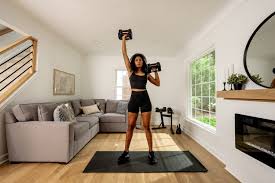
Adjustable dumbbells are great if you want to add weight. Instead of having a whole rack of weights, you have one pair that can be adjusted. This saves a huge amount of space.
Some designs are very compact. They can be stored under a couch or in a closet.
Consider foldable equipment. Some exercise bikes or treadmills are designed to fold up. They can then be stored against a wall or in a corner.
This makes them disappear when not in use. Similarly, a foldable weight bench can be a game-changer. It adds versatility without permanent clutter.
Don’t forget the humble doorway. A doorway pull-up bar is a classic. It uses vertical space.
It requires no floor space. You can do pull-ups and chin-ups. These are excellent for upper body strength.
Just make sure your doorframe is sturdy and the bar is installed safely.
Smart Storage: The Unsung Hero
Even with compact equipment, storage is vital in a tight space. Everything needs a home. If your yoga mat is always on the floor, it takes up valuable movement area.
If your resistance bands are in a tangled pile, it’s annoying. Smart storage makes a huge difference. It keeps your workout area clear and inviting.
Think vertically. Wall shelves can hold smaller items. A wall-mounted rack can store resistance bands or jump ropes.
You can even get hooks to hang mats or foam rollers. If you can’t drill into walls, consider tension rod shelves in closets or corners.
Under-bed storage is another excellent option. Boxes or drawers that slide under your bed can hold your folded equipment, workout clothes, or smaller weights. This keeps them out of sight and out of the way.
Multi-functional furniture can also help. A storage ottoman can hold your yoga mat and bands. A bench with built-in storage is ideal.
These pieces serve a dual purpose. They are useful in your living space and helpful for your gym gear.
Keep your workout zone defined. Even if it’s just a corner of a room, use your yoga mat to mark the boundaries. When you’re done, roll up the mat and put it away.
This helps your space feel less like a permanent gym and more like a multi-use area. This mental shift is important for keeping peace with roommates or family.
Tiny Space, Big Results: Workout Flow
This is a sample circuit. Do each exercise for 45 seconds, rest for 15 seconds, then move to the next. Repeat the circuit 2-3 times.
- Bodyweight Squats: Focus on form.
- Push-ups: On knees if needed.
- Jumping Jacks (or Step Jacks): Get your heart rate up.
- Stationary Lunges: Alternate legs each round or halfway through the interval.
- Plank: Hold steady.
- Glute Bridges: Squeeze your glutes at the top.
After the circuit: Jump rope for 2-3 minutes if space allows, or do high knees in place.
Making the Most of Vertical Space
When floor space is limited, think up! Vertical space is often underutilized. Doorways are prime real estate.
As mentioned, a doorway pull-up bar is excellent. Many can be installed without screws. They provide a great upper body workout.
Consider wall-mounted options if you can. A small wall-mounted rack can hold dumbbells or kettlebells. You can even get resistance band anchors that attach to the wall.
These allow for a wider range of motion for exercises like rows or chest presses.
If wall mounting isn’t an option, think about tension rods. These can be used in door frames or corners. You can hang light equipment from them.
You can also use them to support makeshift pulley systems for some exercises. It requires some DIY spirit, but it’s doable.
Even small items can utilize vertical space. Hang your jump rope from a hook. Store your resistance bands in a tall, narrow container.
Keep your yoga mat rolled and standing in a corner. It’s about stacking things efficiently.
Think about your environment. Are there sturdy shelves you can use? Can you place a small, stable stool in a corner to hold weights?
Every little bit of elevated storage helps free up your floor for movement.
Cardio in Confined Areas
Getting your heart rate up is crucial. But how do you do that when you can barely jog in place? Cardio doesn’t always mean running a marathon.
It means elevating your heart rate consistently. There are many ways to achieve this in a small space.
As we said, a jump rope is king. It provides an intense cardio workout. It’s very efficient for calorie burning.
Make sure you have enough headroom. If your ceiling is too low, consider a ” giả ” jump rope. These have handles but no rope, so you mimic the motion without the swing.
High knees in place are great. You lift your knees as high as you can. You can pump your arms too.
This gets your heart rate up quickly. You can do this for extended periods.
Butt kicks are similar. You bring your heels up towards your glutes. This also elevates your heart rate.
It works your hamstrings.
Mountain climbers are another excellent option. Start in a plank position. Bring one knee towards your chest.
Then switch legs rapidly. It’s like running in a plank. It works your cardio and your core.
Shadow boxing is also a good choice. You punch the air. You can add footwork.
It’s a full-body cardio workout. It requires very little space. You just need room to move your arms and step a little.
If you have a bit more room, jumping jacks are wonderful. If full jumping jacks are too much, do step jacks. This is a lower-impact version.
You step one foot out to the side. You raise your arms overhead. Then return to center.
Alternate sides. It’s still effective cardio.
Cardio Quick Hits for Small Spaces
Option 1: Jump Rope
- Pros: High calorie burn, great for conditioning.
- Cons: Needs vertical space, can be noisy.
Option 2: High Intensity Bodyweight
- Exercises: High knees, butt kicks, mountain climbers, burpees (modified if needed).
- Pros: No equipment needed, can be done anywhere.
- Cons: Can be less engaging for some than rhythmic cardio.
Option 3: Dance/Aerobics Videos
- Pros: Fun, guided workouts, often designed for limited space.
- Cons: Requires a screen, might not be intense enough for advanced users.
Strength Training Variations for Tight Quarters
When you can’t do a full deadlift with a barbell, what can you do? You can adapt. Resistance bands are amazing for strength.
You can anchor them to a door or a sturdy piece of furniture. This allows you to do rows, chest presses, and even bicep curls.
For lower body, you can use bands for added resistance on squats and lunges. You can also do glute kickbacks and lateral walks with bands around your ankles or thighs. These exercises target muscles in new ways and build strength effectively.
Kettlebells are also quite versatile. A single kettlebell can be used for swings, squats, and presses. They have a smaller footprint than a set of dumbbells.
They offer a different kind of challenge due to the weight distribution.
Think about isometric exercises. These involve holding a position for a period. Wall sits are a great example.
You lean against a wall with your back flat. Your knees are bent at a 90-degree angle. Hold this position.
It builds leg endurance and strength.
Another isometric move is a hollow hold. This is similar to a plank but with your body slightly curved. Your lower back stays pressed into the floor.
Your arms and legs are lifted slightly off the floor. This intensely works your core muscles.
You can also use your furniture. A sturdy chair can be used for triceps dips. You can do incline or decline push-ups using a chair or a step.
These variations change the angle of the exercise. This works your muscles differently and can increase the challenge.
Flexibility and Mobility in Small Spaces
Flexibility and mobility are just as important as strength and cardio. They help prevent injuries and improve movement quality. You don’t need a lot of space for good stretching.
Static stretches can be done while standing or sitting. Hamstring stretches can be done while sitting on the floor with legs extended. Quad stretches can be done standing, holding your ankle to your buttock.
Chest stretches can be done by reaching your arms back or using a doorway to open your chest.
Dynamic stretches are great as a warm-up. Arm circles, leg swings, and torso twists can all be done in a small area. These movements prepare your body for exercise.
They improve range of motion.
Yoga and Pilates are excellent for small spaces. Many poses require only your body and a mat. They focus on flexibility, strength, and body control.
You can find countless online videos designed for small spaces.
Foam rolling is also important for recovery and mobility. A foam roller can be used on the floor. You lie on it and roll out tense muscles.
It takes up space when in use but can often be stored vertically.
Your Daily Mobility Routine (5 Mins)
Do these in a small spot:
- Neck Rolls: Gently roll your head side to side. (30 seconds)
- Shoulder Rolls: Forward and backward. (30 seconds)
- Arm Circles: Small to large, forward and backward. (1 minute)
- Torso Twists: Stand with feet hip-width, twist your upper body. (1 minute)
- Leg Swings: Forward/backward and side-to-side. Hold onto a wall for balance. (1 minute per leg)
- Cat-Cow Stretch: On hands and knees, arch and round your back. (1 minute)
Real-World Scenario: The Studio Apartment Workout
Imagine Sarah, who lives in a studio apartment in New York City. Her living room doubles as her bedroom and dining area. There’s a couch, a bed, a small table, and a TV.
Her workout space is essentially a cleared area of about 6×8 feet.
Sarah’s goal is to stay fit and healthy. She can’t afford a gym membership. She also doesn’t want her apartment to feel cramped and cluttered with equipment.
Her strategy is simple: focus on what she can do with what she has.
In the morning, before her day gets hectic, she rolls out her thin yoga mat. This defines her workout zone. She starts with 5 minutes of dynamic stretching.
Then, she does a circuit of bodyweight exercises: squats, lunges (stationary to save space), push-ups (on her knees often), and planks. She uses her resistance bands for added challenge during squats and for band pull-aparts.
For cardio, she uses a jump rope. She’s learned to do different types of jumps so she doesn’t always need to move forward or backward much. She keeps her sessions short but intense, maybe 15 minutes.
After her workout, she immediately rolls up her mat and stores her bands and jump rope in a small storage bin under her bed. Her apartment looks like an apartment again, not a gym.
Sarah’s success isn’t about having a lot of space or fancy gear. It’s about commitment and resourcefulness. She utilizes her environment smartly.
She knows her limits but pushes them with creative exercise choices.
When is Your Small Space Workout “Enough”?
It’s easy to think that because your space is small, your workouts have to be less effective. This isn’t true. What matters most is consistency and effort.
If you’re breaking a sweat, feeling challenged, and progressing over time, your workout is likely effective.
How do you know if it’s “enough”?
- You feel stronger: Can you do more reps? Can you hold a plank longer? Are exercises that were once hard now easier?
- Your endurance improves: Can you do your cardio for longer? Do you get less winded during daily activities?
- You see physical changes: Your clothes fit better, you notice more muscle tone, or you feel more energetic.
- You feel better mentally: Exercise is a great stress reliever. If you feel calmer and happier after your workouts, that’s a sign of success.
In a small space, you might need to be more creative. You might do more reps. You might decrease rest times.
You might use resistance bands to add weight. You might focus on compound movements that work multiple muscles at once.
The key is to challenge yourself. If you’re always doing the same thing at the same intensity, your body will adapt. It will stop seeing it as a challenge.
So, even in a small space, aim to increase difficulty over time. This could mean adding another set, holding a plank for longer, or using a stronger resistance band.
Tips for Staying Motivated in a Tight Space
Motivation can be tough, especially when your workout area is also your living space. Here are some tips:
- Schedule it: Treat your workout like an important appointment. Put it in your calendar.
- Make it a Habit: The more you do it, the easier it becomes. Aim for consistency.
- Find an Accountability Partner: Text a friend before and after your workout.
- Variety is Key: Don’t do the exact same routine every day. Mix up bodyweight exercises, cardio, and flexibility work.
- Music Power: Create an upbeat playlist that gets you pumped up.
- Focus on Progress, Not Perfection: Some days will be harder than others. That’s okay. Just show up.
- Visualize Your Goals: Remind yourself why you started. What do you want to achieve?
- Reward Yourself: Set small goals and give yourself a healthy reward when you reach them.
Having a small space can actually be an advantage for motivation. Your workout area is always accessible. You don’t have to travel to a gym.
You can squeeze in a quick workout anytime you have a few minutes. This accessibility can be a powerful tool.
Frequently Asked Questions About Small Space Workouts
Can I really get fit with just bodyweight exercises in a small apartment?
Absolutely! Your own body is a powerful tool. Bodyweight exercises like squats, push-ups, lunges, and planks build strength and endurance.
With creative variations and consistent effort, you can achieve excellent fitness results without any equipment. Adding resistance bands can further enhance your workouts.
What is the best cardio workout for a tiny living room?
A jump rope is excellent if you have enough ceiling height. If not, high-intensity bodyweight exercises like high knees, butt kicks, and mountain climbers are fantastic. Dancing to music or following an online cardio video designed for small spaces are also great options.
Focus on movements that elevate your heart rate within your available space.
How much space do I actually need for a home workout?
You need just enough space to perform the exercise safely without hitting furniture or walls. For many bodyweight exercises like squats or planks, you only need enough room to lie down or stand comfortably with a little wiggle room. A yoga mat (about 2×6 feet) can help define your workout area.
I have very little storage space. What workout equipment is best?
Opt for highly portable and storable items. Resistance bands are very compact. A jump rope takes up minimal space.
Adjustable dumbbells are better than a full set of weights. Look for equipment that folds or can be hung vertically. A good yoga mat can be rolled up and stored in a corner or closet.
How can I prevent my workout space from feeling cluttered?
Smart storage is key. Use wall hooks, under-bed bins, or storage ottomans to keep your gear out of sight when not in use. Define your workout area with a mat and put it away after your session.
Keep your routine simple and focus on versatile equipment that serves multiple purposes.
Is it safe to do exercises like burpees in a small apartment?
You can do modified burpees. Instead of jumping up, stand up. Instead of a push-up, do an incline push-up against a stable surface like a couch.
Or simply do fewer burpees and focus on controlled movements. Always be aware of your surroundings to avoid injury.
Conclusion: Your Fitness Journey, Anywhere
Living in a small space doesn’t have to mean sacrificing your fitness. With a little creativity and smart choices, you can build a highly effective home workout routine. Bodyweight exercises are your foundation.
Compact equipment and smart storage are your allies. Focus on consistency, challenge yourself, and celebrate your progress.
Your apartment walls don’t define your potential. They just guide your approach. Embrace the challenge, get moving, and enjoy the health benefits.
You’ve got this!

Related Posts
Quick Workout Before Work
15 Minute Home Workout