
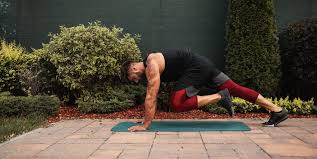
Effective home workouts for men focus on compound movements that work multiple muscle groups. Bodyweight exercises, resistance bands, and simple weights can build strength and improve fitness without needing a gym. Consistency is key to seeing results and staying motivated.
The Power of Home Workouts for Men
Working out at home is a game-changer for busy schedules. It saves time and money. Plus, you can create your own comfortable space.
This guide will show you how to get a great workout without leaving your house.
We’ll cover different types of exercises. You’ll learn how to plan your week. We’ll also talk about staying motivated.
This is all about making fitness fit into your life. No more excuses!
Building a Strong Foundation: Key Principles
Getting strong at home follows simple rules. Your body is the best tool. You can use it for amazing feats of strength.
The focus is on using your own weight. You can also add simple tools to make it harder.
Think about how much weight you can lift. At home, that’s your own body. You can change how you do an exercise.
This makes it easier or harder. It’s all about finding the right challenge for you. This keeps your muscles guessing.
Progressive Overload at Home
To get stronger, you must keep challenging your muscles. This is called progressive overload. At home, you can do this in a few ways.
You can do more reps of an exercise. You can do more sets. You can rest for shorter times between sets.
You can also make the exercise harder. For example, you can do push-ups on one leg. Or you can do jumping squats.
Adding resistance bands or weights helps too. It’s like turning up the dial little by little.
Mind-Muscle Connection
It’s not just about moving. It’s about feeling the muscle work. Focus on the target muscle during each movement.
This helps you build muscle better. It also helps prevent injuries. When you do a squat, feel your thighs and glutes working.
Squeeze them at the top.
This focus makes your workout more effective. It’s like telling your body, “This is the muscle I want to build.” It’s a mental part of the physical work. It makes a big difference over time.
You’ll see and feel the results more.
Essential Bodyweight Exercises for Men
Bodyweight exercises are the backbone of home fitness. They use your own weight for resistance. They work many muscles at once.
These are called compound movements.
They are super efficient. You can build a lot of strength and muscle this way. You don’t need any equipment for most of them.
They are also easy to do anywhere.
1. Push-Ups: The Upper Body King
Push-ups work your chest, shoulders, and triceps. They also engage your core muscles. Proper form is key to get the most benefit and avoid strain.
Start on your hands and knees. Place your hands slightly wider than shoulder-width apart. Your fingers should point forward.
Extend your legs back so your body forms a straight line from head to heels. Keep your core tight. Lower your chest towards the floor.
Keep your elbows tucked slightly, not flaring out wide. Push back up to the starting position.
Variations for Progression:
- Knee Push-Ups: Easier version. Do push-ups with your knees on the floor.
- Incline Push-Ups: Place hands on an elevated surface like a table or chair. Makes it easier.
- Decline Push-Ups: Place feet on an elevated surface. Makes it harder.
- Diamond Push-Ups: Bring hands close together, forming a diamond shape. Works triceps more.
- Wide Push-Ups: Place hands wider apart. Works chest more.
Aim for 3 sets. Do as many reps as you can with good form. Rest for 60-90 seconds between sets.
2. Squats: The Lower Body Powerhouse
Squats are amazing for your legs and glutes. They also work your core. They help build functional strength.
This means strength you can use in daily life.
Stand with your feet shoulder-width apart. Your toes can point slightly outward. Keep your chest up and your back straight.
Lower your hips as if you are sitting back into a chair. Go down until your thighs are parallel to the floor, or as low as you can comfortably go. Make sure your knees track over your toes, not caving inward.
Push through your heels to return to the starting position.
Variations for Progression:
- Jump Squats: Explode upward into a jump at the top of the squat.
- Pistol Squats (Advanced): Squat on one leg while the other leg is extended forward.
- Squat Jumps with Knee Tuck: Jump and pull your knees towards your chest.
- Goblet Squats: Hold a weight (like a jug of water or dumbbell) at your chest.
Do 3 sets of 10-15 repetitions. Focus on depth and control.
3. Lunges: Balance and Strength
Lunges target your quadriceps, hamstrings, and glutes. They also improve balance and coordination.
Start by standing tall. Step forward with one leg. Lower your body until both knees are bent at about a 90-degree angle.
Your front knee should be directly over your ankle. Your back knee should hover just above the floor. Push off your front foot to return to the starting position.
Alternate legs with each step.
Variations for Progression:
- Walking Lunges: Take a step forward, lunge, then step the back leg forward to lunge again.
- Reverse Lunges: Step backward instead of forward. Easier on the knees.
- Curtsy Lunges: Step one leg diagonally behind the other. Works glutes and outer thigh.
- Weighted Lunges: Hold dumbbells or other weights.
Perform 3 sets of 10-12 lunges per leg. Keep your torso upright.
4. Planks: The Core Stabilizer
The plank is a fantastic exercise for your entire core. It strengthens your abs, back, and obliques. It also improves posture.
Get into a push-up position. Then, lower yourself onto your forearms. Your elbows should be directly below your shoulders.
Your body should form a straight line from head to heels. Engage your core by pulling your belly button towards your spine. Don’t let your hips sag or rise too high.
Hold this position.
Variations for Progression:
- Elbow Plank: The standard version on your forearms.
- High Plank: On your hands, like the top of a push-up.
- Side Plank: Lie on your side, support yourself on one forearm and the side of your foot.
- Plank Jacks: Jump your feet out wide and then back together, like a jumping jack.
- Plank with Arm/Leg Raise: Lift one arm or leg while holding the plank.
Hold for 30-60 seconds for 3 sets. Focus on steady breathing.
5. Burpees: The Full-Body Challenge
Burpees are a high-intensity exercise. They work your entire body. They get your heart rate up fast.
They are a great cardio and strength combo.
Start standing. Drop into a squat. Place your hands on the floor in front of you.
Kick your feet back into a plank position. Do a push-up. Jump your feet forward back towards your hands.
Stand up and jump, reaching your arms overhead. That’s one burpee. Modify by skipping the push-up or the jump.
Variations for Progression:
- Standard Burpee: Includes a push-up and a jump.
- Burpee without Push-up: Skip the push-up.
- Burpee without Jump: Stand up at the end, no jump needed.
- Burpee with Tuck Jump: Jump and tuck your knees to your chest.
Aim for 3 sets of 8-12 repetitions. Keep the pace brisk but controlled.
Bodyweight Exercise Quick Guide
Push-Ups: Chest, Shoulders, Triceps. Start easy, progress to harder variations.
Squats: Legs, Glutes, Core. Focus on depth and form.
Lunges: Legs, Glutes, Balance. Alternate legs for full benefit.
Plank: Core Stability. Hold steady, breathe deep.
Burpees: Full Body, Cardio. High intensity, great for conditioning.
Adding Resistance: Tools for Home Workouts
While bodyweight is powerful, adding resistance can boost results. It helps you build more muscle and strength over time. Luckily, you don’t need a full gym.
A few simple tools go a long way.
These tools let you continue to challenge your muscles. This is important for long-term progress. They offer variety and new ways to stimulate growth.
They can make exercises much harder, even for experienced people.
1. Resistance Bands
Resistance bands are very versatile. They come in different strengths. You can use them for many exercises.
They add tension throughout the movement.
You can loop them around your legs for squats and glute bridges. You can stand on them and pull upwards for arm exercises. They are great for warm-ups and cool-downs too.
They are lightweight and easy to store.
Sample Band Exercises:
- Band Pull-Aparts: For upper back and shoulders.
- Banded Squats: Loop band around thighs.
- Banded Glute Bridges: Loop band around thighs.
- Banded Rows: Anchor band and pull towards you.
- Banded Chest Press: Anchor band behind you and push forward.
These can be done for 3 sets of 15-20 reps. Focus on feeling the tension.
Resistance Band Benefits
Affordable: Much cheaper than weights.
Portable: Take them anywhere.
Versatile: Hundreds of exercises possible.
Joint Friendly: Tension is constant, less shock.
Variable Resistance: Gets harder as you stretch it.
2. Dumbbells and Kettlebells
If you can invest in a few weights, dumbbells or kettlebells are excellent. Start with a couple of different weights. Maybe one lighter and one heavier pair.
These allow you to do exercises like dumbbell presses, rows, and deadlifts. You can add weight to squats and lunges. Kettlebells are great for dynamic movements like swings.
Key Dumbbell/Kettlebell Exercises:
- Dumbbell Bench Press: Lie on the floor and press weights up.
- Dumbbell Rows: Bend at hips, pull weight towards chest.
- Dumbbell Shoulder Press: Stand or sit and press weights overhead.
- Kettlebell Swings: A powerful hip-hinge movement for posterior chain.
- Goblet Squat: Hold one weight at your chest.
- Romanian Deadlifts (RDLs): With dumbbells, for hamstrings and glutes.
For strength, aim for 3 sets of 8-12 reps. For endurance, 12-15 reps.
3. Pull-Up Bar
A pull-up bar is a fantastic investment for upper body strength. It’s one of the best exercises for your back and biceps.
You can get door-frame pull-up bars that require no installation. Many also offer dip stations for chest and triceps.
Pull-Up Bar Exercises:
- Pull-Ups: Grip bar shoulder-width apart, palms facing away. Pull yourself up.
- Chin-Ups: Grip bar shoulder-width apart, palms facing you. Pull yourself up. Works biceps more.
- Hanging Leg Raises: Hang and lift your legs towards your chest for abs.
- Dips (if station available): Use parallel bars to lower and raise your body.
If full pull-ups are too hard, use resistance bands for assistance or try negatives (jump up and slowly lower down).
Workout Tool Comparison
Bodyweight: Free, accessible, great for beginners.
Resistance Bands: Cheap, portable, versatile, good for all levels.
Dumbbells/Kettlebells: More costly, effective for heavy lifting, muscle growth.
Pull-Up Bar: Great for back/biceps, can be space-saving.
Designing Your Home Workout Routine
Consistency is key. A well-planned routine makes it easier to stick with it. Think about your goals.
Do you want to build muscle? Lose fat? Improve general fitness?
Most men benefit from a full-body routine at least 3 times a week. Or you can split your workouts. For example, upper body one day, lower body the next.
Full-Body Workout Plan (3 Days a Week)
This is a great starting point. It ensures you work all major muscle groups regularly. You’ll need at least one rest day between workouts.
For example, Monday, Wednesday, Friday.
Workout Structure:
- Warm-up (5-10 minutes): Light cardio (jogging in place, jumping jacks), dynamic stretches (arm circles, leg swings).
- Strength Exercises: Choose 4-6 exercises that cover major muscle groups.
- Cool-down (5 minutes): Static stretching (hold stretches for 20-30 seconds).
Sample Full-Body Workout:
- Squats (Bodyweight or Weighted): 3 sets of 10-15 reps
- Push-Ups (or variation): 3 sets of as many reps as possible (AMRAP)
- Dumbbell Rows (or Band Rows): 3 sets of 10-12 reps per arm
- Lunges (Bodyweight or Weighted): 3 sets of 10-12 reps per leg
- Plank: 3 sets, hold for 30-60 seconds
- Burpees: 3 sets of 8-10 reps
Focus on good form. Don’t rush through the movements. As you get stronger, increase reps, sets, or resistance.
Upper/Lower Body Split (4 Days a Week)
This split allows for more volume for each muscle group. It requires training four days a week. For example, Monday (Upper), Tuesday (Lower), Thursday (Upper), Friday (Lower).
Upper Body Day:
- Push-ups (various types): 3-4 sets, AMRAP
- Dumbbell Bench Press (on floor): 3 sets, 8-12 reps
- Dumbbell Rows: 3 sets, 10-12 reps per arm
- Overhead Press (Dumbbells or Bands): 3 sets, 8-12 reps
- Bicep Curls (Dumbbells or Bands): 3 sets, 10-15 reps
- Triceps Dips (using chair or dip bars): 3 sets, 10-15 reps
Lower Body Day:
- Squats (Weighted): 3-4 sets, 8-12 reps
- Romanian Deadlifts (Dumbbells): 3 sets, 10-12 reps
- Lunges (Weighted): 3 sets, 10-12 reps per leg
- Glute Bridges (Weighted or Banded): 3 sets, 15-20 reps
- Calf Raises (Weighted): 3 sets, 15-20 reps
Remember to include core work on both days or dedicate a short period at the end.
Workout Planning Tips
Listen to Your Body: Rest when you need to.
Warm Up First: Prepare your muscles.
Cool Down After: Aid recovery.
Progress Gradually: Don’t do too much too soon.
Stay Hydrated: Drink water.
Nutrition Matters: Eat well to fuel your body.
My Own Home Workout Journey
I remember when I first started training at home. It was during a time when my local gym was closed for renovations. I felt a bit lost.
I was used to the machines and barbells. Could I really get a good workout with just my body and a few dumbbells I had lying around?
The first few weeks were tough. I wasn’t sure if I was doing enough. My muscles didn’t feel as sore as usual.
I worried I wasn’t making progress. I felt a bit lazy, honestly. I’d skip workouts because I didn’t feel ‘motivated’ enough.
It was a mental battle as much as a physical one.
One evening, I decided to try a full-body circuit. I used my dumbbells and did a series of exercises back-to-back with minimal rest. Squats, rows, push-ups, lunges, then a quick plank.
When I finished, I was sweating buckets! My heart was pounding. My muscles felt tired but in a good way.
That’s when it clicked. You don’t need fancy equipment to push yourself hard. It’s about intensity and challenging yourself.
That feeling of accomplishment after a tough session kept me going. Now, home workouts are a regular part of my routine.
Real-World Context: Making Home Workouts Work for You
Your home environment might be different from a gym. You have distractions like family, pets, or household chores. You also might have limited space.
The key is to adapt. Turn a corner of a room into your workout zone. Use furniture for support.
Schedule your workouts when you’re least likely to be interrupted. Even 20-30 minutes can make a difference.
Space and Equipment Considerations
Don’t let limited space stop you. Many exercises require very little room. Squats, lunges, and push-ups need just enough space to move your body.
Resistance bands are tiny and take up no space at all.
If you have a small apartment, focus on bodyweight and bands. A doorway pull-up bar is also a good space-saving option. Think smart about how you use the space you have.
Consistency and Motivation
Motivation can be a challenge at home. There’s no trainer or workout buddy pushing you. Find what keeps you going.
- Set Small Goals: Aim to complete a certain number of workouts each week.
- Track Your Progress: Log your reps, sets, and weights. Seeing improvement is motivating.
- Find a Workout Buddy (Virtual): Train alongside a friend on a video call.
- Music: Create a high-energy playlist.
- Reward Yourself: Plan small rewards for hitting milestones.
Remember why you started. Focus on how good you feel after a workout. That feeling often outweighs the initial reluctance.
What This Means for You: Normal vs. Concerning Signs
It’s important to know what’s normal and when to pay attention. Exercise should feel challenging, but not painful. Your body will adapt and get stronger over time.
When to Push Harder
If you can easily do more than 15 reps of an exercise with good form, it’s time to make it harder. This could mean adding weight, slowing down the movement, or trying a harder variation.
Feeling a bit sore for a day or two after a workout is normal. It means your muscles are recovering and growing. This is called delayed onset muscle soreness (DOMS).
When to Be Cautious
Sharp, sudden pain during an exercise is a red flag. Never push through sharp pain. Stop the exercise immediately.
If you feel extreme fatigue that doesn’t go away, or if you have persistent joint pain, it might be time to rest or consult a professional. Overtraining can lead to injury and burnout. Listen to your body’s signals.
Simple Checks:
- Can you do the exercise without pain?
- Are you feeling a challenge, but not exhaustion?
- Is your recovery time reasonable (1-2 days of mild soreness)?
If you answered yes to these, you’re likely on the right track.
Quick Tips for Home Workout Success
Here are some easy tips to make your home workouts effective and enjoyable.
- Morning Workouts: Get it done before the day gets busy.
- Workout Clothes: Put them on even if you’re not leaving the house. It sets the mood.
- Hydration Station: Keep water nearby.
- Nutrition First: Fuel your body with healthy foods. Protein helps build muscle.
- Sleep Well: Your body repairs and grows during sleep.
- Variety is Key: Mix up your exercises to keep things interesting and challenge muscles differently.
These small habits add up to big results over time. They support your fitness goals.
Frequently Asked Questions About Home Workouts for Men
Can men build significant muscle at home without weights?
Yes, absolutely. While weights help with heavy lifting, you can build significant muscle at home using progressive overload with bodyweight exercises, resistance bands, and challenging variations. Focus on increasing reps, sets, reducing rest, or using harder exercise forms.
How often should men do home workouts for best results?
For general fitness and muscle building, aim for 3-5 workouts per week. A full-body routine 3 times a week or an upper/lower split 4 times a week are common, effective schedules. Ensure you have rest days for muscle recovery.
What’s a good beginner home workout routine for men?
A beginner routine should focus on compound bodyweight exercises. Start with 3 days a week of full-body workouts. Include exercises like bodyweight squats, push-ups (on knees if needed), lunges, planks, and maybe some glute bridges.
Focus on learning proper form.
Do I need a lot of space to work out at home?
No, you don’t need much space. Many effective exercises like squats, lunges, and push-ups require minimal room. Resistance bands and dumbbells are also compact.
You can create a functional workout space even in a small area.
How can I stay motivated to work out at home?
Staying motivated involves setting clear goals, tracking progress, playing motivating music, finding a virtual workout buddy, and remembering the positive feelings after exercise. Make your workout space inviting and treat yourself for hitting milestones.
What are the best home exercises for abs for men?
For abs, focus on core stability and strength. Planks (and variations like side planks), leg raises (hanging or lying), Russian twists (with or without weight), and bicycle crunches are highly effective. Ensure you engage your core throughout.
Conclusion: Your Home Fitness Journey Starts Now
Getting fit at home is totally achievable for men. You have the tools and knowledge now. Focus on consistency, challenging yourself, and listening to your body.
You’ll build strength and feel better.
Start today with one simple exercise. Gradually add more. Enjoy the journey to a stronger you, right in your own space.
Your fitness goals are within reach!

Leave a Reply