Full Body Dumbbell Workout At Home
Thinking about getting stronger at home? You might have dumbbells lying around. That’s a great start!
Many people feel stuck not knowing how to use them well. It can be frustrating when you want to work out but don’t have a full gym. This guide is for you.
We’ll show you how to build a complete workout using just dumbbells. You’ll learn about key exercises and how to put them together.
A full body dumbbell workout at home is a practical way to build strength and fitness. It uses simple exercises to work all major muscle groups effectively. This approach is great for beginners and experienced folks alike who want a convenient workout solution.
Understanding Your Home Dumbbell Workout
A full body workout means you hit all the main parts of your body in one session. Think about your chest, back, legs, arms, and core. Doing this helps your muscles grow and keeps your body balanced.
It’s also very time-efficient. You can get a lot done in one sitting.
Why is this so popular now? Lots of us want to stay fit but also stay home. Maybe you have kids.
Maybe you dislike crowded gyms. Or maybe it’s just easier to roll out of bed and grab your weights. Whatever your reason, a home dumbbell routine works well.
The magic of dumbbells is their versatility. You can do many different movements. You can change the weight easily.
This lets you keep challenging your muscles as you get stronger. It’s about smart movement, not just lifting heavy things.
My First Home Dumbbell Struggle
I remember when I first tried to do a full body workout at home. I had a set of adjustable dumbbells and a vague idea of what to do. I ended up doing endless bicep curls and chest presses.
My legs felt neglected. My back didn’t get much attention. I felt unbalanced.
After a few weeks, I wasn’t seeing the results I hoped for. It felt like I was just going through the motions. The frustration was real.
I’d read about full body workouts being great, but mine just wasn’t working.
One evening, I looked in the mirror and saw my arms were looking okay, but my legs were still skinny. My shoulders were a little rounded. That’s when I knew I needed a better plan.
I had to learn how to make every dumbbell count. I had to think about my whole body, not just the parts I liked training. It took some research and a lot of trial and error.
But figuring it out made a huge difference.
Workout Structure Basics
Warm-up (5-10 mins): Light cardio like jogging in place, arm circles, leg swings. Get your blood flowing.
Main Workout: Focus on compound movements that use multiple muscles.
Cool-down (5-10 mins): Stretching major muscle groups. Hold each stretch for 20-30 seconds.
The Core Exercises for a Full Body Session
To build a solid routine, you need exercises that work big muscle groups. These are called compound exercises. They give you the most bang for your buck.
Let’s look at the best ones using dumbbells.
1. Lower Body Power: The Dumbbell Squat
This is king for legs. It works your quads, hamstrings, and glutes. Stand with your feet shoulder-width apart.
Hold a dumbbell in each hand by your sides, or one dumbbell held vertically at your chest (goblet squat).
Lower your hips as if sitting in a chair. Keep your back straight and chest up. Your knees should track over your toes.
Go as low as you can comfortably. Then push back up to the start. Aim for 3 sets of 8-12 reps.
2. Upper Body Push: The Dumbbell Bench Press
This hits your chest, shoulders, and triceps. You can do this on a bench if you have one. If not, the floor works too (floor press).
Lie on your back. Hold a dumbbell in each hand at chest level. Your palms should face each other or slightly forward.
Lower the weights slowly towards your chest. Your elbows should be at about a 45-degree angle from your body. Press the weights straight up until your arms are extended.
Do 3 sets of 8-12 reps. If on the floor, your upper arms will touch the floor at the bottom. This limits your range but is safer for beginners.
3. Upper Body Pull: The Dumbbell Row
This is crucial for your back muscles. It also works your biceps. You can do this one arm at a time (single-arm row) or both arms together.
For a single-arm row: Place one knee and hand on a bench or sturdy chair. Let the other leg hang down. Keep your back straight and parallel to the floor.
Hold a dumbbell in the opposite hand. Let it hang down. Pull the dumbbell up towards your hip.
Squeeze your back muscles. Lower the weight slowly. Do 3 sets of 10-15 reps on each side.
4. Shoulder Strength: The Dumbbell Overhead Press
This targets your shoulders and triceps. Stand or sit with a dumbbell in each hand at shoulder height. Your palms can face forward or slightly inward.
Press the dumbbells straight up overhead. Keep your core tight. Lower the weights slowly back to shoulder height.
Be careful not to arch your back too much. Aim for 3 sets of 8-12 reps.
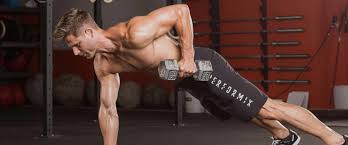
5. Core Stability: The Dumbbell Plank
This exercise is amazing for your core muscles. Get into a plank position. Place a dumbbell on your upper back, just below your shoulder blades.
Hold for 30-60 seconds. Repeat 3 times. This adds extra challenge.
Alternatively, hold a dumbbell in one hand while in a plank. This is a side plank with a weight. It works your obliques harder.
Do 3 sets of 30-45 seconds per side.
Putting It All Together: Sample Workout Structure
Now, how do you combine these into one workout? A good approach is to pick one or two exercises for each major body part. You want to make sure you hit everything.
Here’s a sample structure you can follow. Remember to rest about 60-90 seconds between sets.
Workout A (Example)
- Dumbbell Squats: 3 sets of 10 reps
- Dumbbell Bench Press (or Floor Press): 3 sets of 10 reps
- Dumbbell Rows (Single Arm): 3 sets of 12 reps per side
- Dumbbell Overhead Press: 3 sets of 10 reps
- Dumbbell Plank: 3 sets, hold for 45 seconds
You can do this workout 2-3 times a week. Make sure you have at least one rest day in between.
Exercise Swaps for Variety
Legs: Dumbbell Lunges (forward, reverse, or walking) instead of or with squats.
Chest: Dumbbell Flyes (on bench or floor) can add a different stretch.
Back: Dumbbell Pullovers can work your lats and chest.
Shoulders: Dumbbell Lateral Raises target the side deltoids.
Arms: Bicep Curls and Triceps Extensions can be added if you have extra time or want to focus more.
Real-World Context: Making Dumbbells Work in Your Space
Your home workout space might not be a gym. It could be your living room floor or a small corner. That’s perfectly fine.
The key is to use what you have and make it safe.
Space: Ensure you have enough room to move your arms and legs freely. You don’t want to hit furniture. A yoga mat can provide a softer surface and prevent slipping.
Dumbbell Choice: Adjustable dumbbells are great for saving space. They let you change the weight easily. If you have fixed dumbbells, try to get a few different weights.
You’ll need lighter ones for some exercises and heavier ones for others.
Technique Over Weight: Always focus on good form. It’s better to lift a lighter weight correctly than a heavier weight poorly. Poor form leads to injuries.
It also means you’re not working the right muscles.
Consistency is Key: Life gets busy. Some days you’ll feel tired. But showing up, even for a shorter workout, makes a difference.
Try to schedule your workouts like any other important appointment. Consistency builds muscle and endurance over time.
What This Means for You: Progress and Plateaus
When you start a new routine, you often see fast progress. This is exciting! Your muscles are getting used to the work.
They become stronger and more efficient.
However, you might hit a plateau. This is when progress slows down or stops. It’s normal.
Your body adapts. To break through, you need to keep challenging yourself. This is called progressive overload.
How to Progress:
- Increase Weight: Once you can easily do the top end of your rep range (e.g., 12 reps), try a slightly heavier dumbbell next time.
- Increase Reps: Stay with the same weight but try to do more repetitions.
- Increase Sets: Add an extra set to your exercises.
- Decrease Rest Time: Shorten the rest periods between sets. This makes the workout more intense.
- Improve Form: Sometimes, perfecting your technique is enough to feel challenged again.
- Change Exercises: Swap out exercises to give your muscles a new stimulus.
Don’t get discouraged if progress slows. It just means you need to be a bit smarter about your training. Your body is telling you it’s ready for more.
Quick Scan: Common Mistakes to Avoid
Mistake: Rushing through reps. Fix: Control the movement, especially on the way down.
Mistake: Not breathing properly. Fix: Exhale on effort, inhale on easier part.
Mistake: Ignoring weaker muscles. Fix: Ensure you’re hitting all major muscle groups.
Mistake: Using momentum. Fix: Focus on muscle contraction, not swinging.
Quick Fixes and Tips for Home Workouts
Here are some practical tips to make your home dumbbell workouts smoother and more effective.
- Listen to Your Body: If something hurts, stop. Don’t push through sharp pain. Muscle soreness is okay, joint pain is not.
- Stay Hydrated: Drink water before, during, and after your workout.
- Nutrition Matters: Eat well to fuel your workouts and help your muscles recover. Protein is important for muscle repair and growth.
- Consistency Over Intensity: It’s better to do a moderate workout consistently than a super-hard one once in a while.
- Set Up Before You Start: Have your water bottle, towel, and weights ready before you begin. This saves time and keeps you in the zone.
- Track Your Progress: Write down the weights you use, reps you do, and how you felt. This helps you see how far you’ve come and plan your next steps.
Dumbbell Workout Flow Example
Warm-up: 5 mins jogging in place, arm circles.
Circuit 1 (3 rounds):
- Dumbbell Squats (10 reps)
- Dumbbell Bench Press (10 reps)
- Rest 60 seconds
Circuit 2 (3 rounds):
- Dumbbell Rows (12 reps per side)
- Dumbbell Overhead Press (10 reps)
- Rest 60 seconds
Core: Dumbbell Plank (45 sec hold) x 3 sets
Cool-down: 5 mins stretching.
Frequent Questions About Home Dumbbell Workouts
How often should I do a full body dumbbell workout?
For most people, 2 to 3 times per week is ideal. This allows your muscles enough time to recover and grow between sessions. Always include at least one rest day between workouts.
What if I only have one dumbbell?
You can still get a great workout! Focus on exercises where one dumbbell is used, like single-arm rows, goblet squats, and lunges. You can also do exercises like push-ups and bodyweight squats.
Your other hand can be used for balance or to press against a wall.
How do I know if I’m using the right weight?
The weight should feel challenging, especially for the last few reps of each set. You should be able to complete the target number of reps with good form, but feel like you couldn’t do many more. If it feels too easy, increase the weight.
If you can’t maintain good form, decrease it.
Can I build muscle with just dumbbells at home?
Absolutely. Building muscle, also known as hypertrophy, relies on progressive overload. By consistently challenging your muscles with increasing weight, reps, or sets, you can stimulate muscle growth effectively using dumbbells at home.
What are the best dumbbell exercises for arms?
For biceps, dumbbell curls (standing or seated) are classic. For triceps, overhead dumbbell extensions and dumbbell kickbacks are effective. You can also include them as secondary muscles in presses and rows.
How can I make my workout harder if it feels too easy?
Try increasing the weight of your dumbbells, doing more repetitions per set, or adding an extra set. You can also decrease the rest time between sets, which increases the workout’s intensity. Performing exercises more slowly, focusing on the eccentric (lowering) phase, can also make them harder.
Should I do cardio on days I do dumbbell workouts?
It depends on your goals. If your main goal is muscle building, focus on your dumbbell workouts and maybe do light cardio or active recovery on rest days. If you want to improve endurance or lose weight, you can add cardio sessions on separate days or shorter cardio bursts after your weight training.
Conclusion and Next Steps
Getting a full body workout at home with dumbbells is totally achievable. You have the tools and the knowledge now. Remember to focus on compound movements, good form, and consistency.
Challenge yourself to grow stronger over time.
Start with the exercises we covered. Listen to your body. And most importantly, enjoy the process of getting fitter and stronger right in your own home.

Related Posts
Quick Workout Before Work
15 Minute Home Workout