Kettlebell Workout At Home
Kettlebell workouts at home are highly effective for building strength, improving cardio, and boosting overall fitness. They require minimal space and just one piece of equipment. You can perform a wide variety of exercises that target multiple muscle groups simultaneously, leading to efficient and comprehensive training sessions.
Understanding Kettlebells and Home Workouts
So, what exactly is a kettlebell? It’s basically a cast iron or steel ball with a handle on top. They come in different weights.
This simple tool can do so much more than you might think. It’s not just for swinging. You can use it for lifting, pressing, squatting, and more.
Working out at home offers freedom. You can go at your own pace. There’s no commute to a gym.
You don’t need to worry about anyone watching you. It’s all about making fitness fit into your life. With a kettlebell, you can get a full-body workout without needing lots of space or fancy equipment.
The magic of kettlebells comes from their shape. The weight is not directly under the handle. This means you have to engage your core and stabilizer muscles more.
This makes many kettlebell moves a compound exercise. That means you work many muscles at once. This is great for saving time and building functional strength.
My First Kettlebell Experience: A Wobbly Start
I remember the first time I decided to really try kettlebell training at home. I had bought a medium-weight kettlebell a few months prior, inspired by seeing athletes perform impressive swings. I set it down in my living room, imagining myself effortlessly flowing through powerful movements.
The reality was… different.
I started with a basic two-hand swing. I’d watched videos, I thought I understood the hip hinge. But my first few swings felt awkward.
My back felt a little strained. I wasn’t really using my hips to drive the weight up. Instead, I was using my arms way too much, which felt tiring and ineffective.
I felt a bit foolish, to be honest. It was a mix of annoyance and a touch of panic. Was I going to hurt myself?
I stopped after just a few tries, feeling defeated. That dusty kettlebell sat there for another month.
The lesson? Proper form is everything. It’s not about how heavy you can lift or how fast you can swing.
It’s about control and using your body the right way. This experience taught me the importance of starting slow and focusing on technique, especially when you’re your own coach at home.
Choosing the Right Kettlebell for Home Use
One of the first big questions is: what weight kettlebell should you get? This can be tricky because you don’t have a trainer to guide you. For women, a good starting point is often around 8 to 16 kg (18 to 35 lbs).
For men, it’s usually 12 to 24 kg (26 to 53 lbs). But this is just a guideline. It really depends on your current fitness level.
Kettlebell Weight Guide
Beginner Women: 8kg (18 lbs) or 12kg (26 lbs)
Beginner Men: 16kg (35 lbs) or 20kg (44 lbs)
Considerations:
- If you lift weights already, you might start heavier.
- If you’re new to strength training, start lighter.
- Can you do 10-15 reps of a movement with good form? If yes, it’s likely a good starting weight.
It’s better to have a lighter kettlebell you use often than a heavy one that gathers dust.
Many people start with one kettlebell. As you get stronger, you might want a second one. Some exercises are better with a lighter weight, while others benefit from a heavier one.
Don’t feel pressured to buy a whole set right away. Start with one that feels challenging but manageable for basic moves.
There are also different types of kettlebells. Competition kettlebells are all the same size, but their weight differs. This is great for advanced users.
For home use, traditional cast iron or adjustable kettlebells are common. Adjustable ones let you change the weight, saving space and money in the long run. However, they can sometimes be a bit clunky.
The Essential Kettlebell Movements for Home
You don’t need dozens of exercises to get a great workout. A few key movements will build a strong foundation. These moves engage your entire body.
They are the building blocks of most kettlebell routines. Learning these well is key to safe and effective training at home.
The Kettlebell Swing
This is the king of kettlebell exercises. It’s a powerful, hip-driven movement. It works your glutes, hamstrings, back, and shoulders.
The swing is also fantastic for cardio. It gets your heart pumping.
To do it right: Stand with feet shoulder-width apart. Place the kettlebell a foot or so in front of you. Hinge at your hips, keeping your back straight.
Grab the kettlebell handle. Pull it back between your legs. Then, drive your hips forward forcefully.
This movement should propel the kettlebell up to chest or shoulder height. Your arms are just guides; your hips do the work. Let the kettlebell swing back down between your legs, ready for the next rep.
Common mistake: Using your arms to lift the weight. Remember, it’s a hip hinge, not a squat. Keep your back flat.
Don’t let the kettlebell hike up your spine.
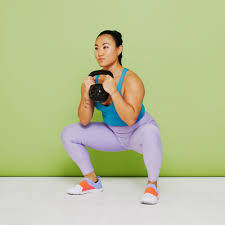
The Kettlebell Goblet Squat
This is a fantastic squat variation. It’s great for building leg strength and improving posture. Holding the kettlebell at your chest helps you stay upright.
To do it: Hold the kettlebell by the horns (the sides of the handle) close to your chest. Stand with your feet a bit wider than shoulder-width apart. Keep your chest up and your back straight.
Lower yourself down as if sitting into a chair. Go as low as you comfortably can while keeping your heels on the ground. Push through your heels to stand back up.
Why it’s good: It teaches you good squat mechanics. It also works your core and upper back muscles to stabilize the weight.
The Kettlebell Deadlift
This is similar to the swing but with a different motion. It’s a foundational strength move. It works your hamstrings, glutes, and lower back.
To do it: Place the kettlebell on the floor between your feet. Stand with your feet about hip-width apart. Hinge at your hips and bend your knees slightly.
Keep your back straight. Grab the kettlebell handle. Drive through your heels and stand up.
Keep the kettlebell close to your body. Squeeze your glutes at the top. Lower the kettlebell back to the floor with control, maintaining a straight back.
Focus on: Keeping your back flat and engaging your hamstrings and glutes. This is a pure hinge movement, not a squat.
The Kettlebell Press (Overhead Press)
This exercise targets your shoulders, triceps, and upper chest. It also challenges your core stability.
To do it: Start with the kettlebell in the “rack” position. This means the kettlebell rests on your forearm, with the handle grasped firmly, and the head of the bell is near your shoulder. Your elbow should be tucked in.
Keep your core tight. Press the kettlebell straight up overhead. Lock out your arm at the top.
Lower it back to the rack position with control. Do this on both sides.
Tip: Don’t let your back arch excessively. Brace your core like you’re about to be punched. This protects your spine.
The Kettlebell Clean
The clean is a dynamic move that brings the kettlebell from the floor to the rack position in one fluid motion. It’s a fundamental exercise for many other kettlebell lifts.
To do it: Start in a deadlift position with the kettlebell on the floor. Perform a powerful hip hinge to drive the kettlebell up. As it rises, pull it towards your shoulder.
As the bell reaches the top, rotate your hand under it and catch it in the rack position. This takes practice. It’s a complex movement.
Practice: It’s often broken down into stages. Start with just the deadlift and the hike (pulling the bell up to chest height). Then work on the “catch” or the rack position.
Structuring Your Home Kettlebell Workout
You have the kettlebell, and you know some basic moves. Now, how do you put it all together? A good workout needs structure.
It should include a warm-up, the main workout, and a cool-down.
Warm-up (5-10 minutes): This prepares your body for exercise. It increases blood flow and loosens your joints.
- Light cardio: Jumping jacks, jogging in place.
- Dynamic stretches: Arm circles, leg swings, torso twists.
- Movement prep: A few bodyweight squats, lunges, and very light kettlebell deadlifts with no weight or a very light weight.
Main Workout (20-40 minutes): This is where you’ll do your kettlebell exercises. You can structure this in a few ways.
Workout Structures for Home
Circuit Training
How it works: Perform a series of exercises one after another with minimal rest. Rest only after completing one full round. Then, repeat the circuit several times.
Example:
- Kettlebell Swing (10 reps)
- Goblet Squat (10 reps)
- Overhead Press (8 reps per side)
- Deadlift (10 reps)
Rest 60-90 seconds, then repeat for 3-5 rounds.
Sets and Reps
How it works: Perform a set number of repetitions for one exercise, then rest. Repeat for a set number of sets before moving to the next exercise.
Example:
- Kettlebell Swings: 3 sets of 15 reps (60 seconds rest between sets)
- Goblet Squats: 3 sets of 12 reps (60 seconds rest between sets)
- Overhead Press: 3 sets of 8 reps per side (60 seconds rest between sets)
EMOM (Every Minute On the Minute)
How it works: Start a timer. At the beginning of each minute, perform a set number of reps of an exercise. The remaining time in that minute is your rest.
When the next minute starts, you begin the exercise again.
Example (10 minutes):
- Minute 1: 10 Kettlebell Swings
- Minute 2: 5 Goblet Squats
- Minute 3: 8 Alternating Lunges with Kettlebell
Repeat this sequence for 10 minutes.
Cool-down (5-10 minutes): Static stretching helps your muscles recover.
- Hold stretches for 20-30 seconds: Hamstring stretch, quad stretch, chest stretch, triceps stretch.
- Focus on deep breaths.
When you’re starting, aim for two or three full-body workouts per week. Let your body recover between sessions. Listen to your body.
If you feel sore, take an extra rest day.
Progressing Your Kettlebell Training at Home
Once you’ve mastered the basic movements and are comfortable with your starting weight, it’s time to progress. This is how you keep getting stronger and fitter. Progression is key to seeing results and avoiding plateaus.
How do you make it harder? There are several ways.
Ways to Progress Kettlebell Workouts
- Increase Weight: This is the most obvious way. Get a heavier kettlebell when the current weight feels too easy.
- Increase Reps: Do more repetitions in each set.
- Increase Sets: Add another round to your circuit or another set to your reps-based workout.
- Decrease Rest: Shorten the rest time between sets or exercises. This increases the intensity and cardiovascular demand.
- Increase Density: Try to do more work in the same amount of time (e.g., more reps in an EMOM).
- Introduce New Exercises: Learn more advanced kettlebell movements like the clean and press, snatches, or Turkish get-ups.
- Combine Movements: Link exercises together (e.g., a clean followed by a press).
- Improve Form: Focus on making each rep perfect. This often means going slower and controlling the movement more, which increases muscle engagement.
I remember when I finally felt ready to use a heavier kettlebell for swings. It was a game-changer. The movement felt more powerful.
I could feel my glutes and hamstrings working much harder. This small step made a big difference in how effective my workouts felt. It showed me that progress isn’t always about adding more exercises; sometimes it’s just about doing the basics better or a little harder.
Common Pitfalls and How to Avoid Them
Training at home can be amazing, but it also comes with unique challenges. You don’t have a gym environment to keep you focused. You might be tempted to cut corners.
Understanding these common pitfalls helps you avoid them.
1. Poor Form
This is the biggest danger. Without a trainer watching, it’s easy to develop bad habits. This can lead to injuries.
Kettlebell movements, especially swings and cleans, require specific mechanics. They rely on hip hinge, not rounding your back.
How to avoid:
- Watch reputable online tutorials (look for certified instructors).
- Record yourself performing exercises and compare it to good examples.
- Start with lighter weights than you think you need.
- Focus on mastering one movement before adding another.
2. Inconsistent Training
Life gets busy. It’s easy to skip a workout when you’re tired or have other things to do. Without the commitment of a gym membership or class, motivation can wane.
How to avoid:
- Schedule your workouts like appointments.
- Find a workout buddy (even if virtual) to keep each other accountable.
- Set realistic goals and celebrate small wins.
- Have a dedicated workout space, even if it’s just a small corner of a room.
3. Not Progressing
Doing the same workout with the same weight forever won’t yield results. Your body adapts. If you don’t challenge it, it will stop changing.
How to avoid: Follow the progression methods discussed earlier. Aim to improve something each week or two. Even small changes count.
4. Neglecting Warm-up and Cool-down
These parts are often skipped when people are short on time or eager to get to the main event. But they are crucial for injury prevention and recovery.
How to avoid: Make them non-negotiable parts of your routine. Treat them with the same importance as the main workout.
5. Overuse Injuries
This can happen from too much too soon, poor form, or not enough rest. It’s your body’s way of saying you’ve pushed too hard.
How to avoid: Listen to your body. Rest when you need to. Don’t push through sharp pain.
Ensure you are using proper technique on all exercises.
Real-World Kettlebell Scenarios at Home
Think about where and when you might use your kettlebell at home. It’s not just for dedicated gym time. It can be integrated into your day.
Integrating Kettlebells into Your Day
The Quick Blast
Scenario: You have a 15-minute gap between meetings or before dinner.
Workout: A quick circuit of 50 swings, 30 goblet squats, and 20 push-ups (or assisted push-ups). Minimal rest. Gets the heart rate up and feels productive.
The Active Recovery
Scenario: You had a tough workout yesterday and feel a bit sore.
Workout: Focus on mobility and light movements. A few sets of very light kettlebell deadlifts or Romanian deadlifts with a focus on the stretch. Gentle goblet squats with an emphasis on deep breathing.
The Weekend Warrior
Scenario: You have more time on a Saturday morning.
Workout: A longer, more challenging workout. Perhaps incorporating more complex moves like the Turkish get-up, or a longer EMOM, followed by some static stretching.
The beauty of kettlebells at home is their versatility. They fit into small spaces. They can be used for short bursts of high intensity or longer, more deliberate strength sessions.
It’s about making fitness work for your specific home environment and schedule.
When Kettlebell Training is Not the Answer
While kettlebells are fantastic, they aren’t for everyone, or for every situation. It’s important to know the limits. This ensures you stay safe and get the best results for your body.
Acute Injuries: If you have a fresh injury, like a sprained ankle or a pulled muscle, it’s best to avoid heavy or dynamic movements. Consult a doctor or physical therapist before returning to exercise. Kettlebells require a solid base of stability.
Certain Medical Conditions: If you have serious heart conditions, high blood pressure that isn’t managed, or significant back problems, you should talk to your doctor before starting kettlebell training. The dynamic nature of some moves can be demanding.
Lack of Space: While kettlebells are space-efficient, you do need enough room to swing them safely. If you live in a tiny apartment with low ceilings and no clear area, swinging might be difficult or dangerous. You might need to stick to grounded exercises like squats and deadlifts.
No Access to Guidance: If you are someone who truly struggles with learning new physical skills on your own and has no access to online resources or a trainer, you might find kettlebells challenging to learn safely. In such cases, starting with bodyweight exercises or seeking in-person coaching could be better.
Your Primary Goal is Pure Hypertrophy (Muscle Size): While kettlebells build muscle, if your sole focus is maximizing muscle size (bodybuilding style), you might find that barbells and dumbbells offer more direct resistance and isolation for certain muscle groups. Kettlebells excel at building functional strength, power, and endurance.
How to Stay Motivated with Home Kettlebell Workouts
Keeping yourself motivated when your gym is also your home can be tough. There are no trainers to push you, no gym buddies to meet. It’s all on you.
But there are ways to keep that fire going.
Track Your Progress: Keep a workout journal. Write down the exercises you did, the weight you used, the reps, and how you felt. Seeing how far you’ve come is a huge motivator.
Did you hit one more rep on swings? Did you hold your squat a bit longer? These small victories add up.
Set Small, Achievable Goals: Instead of saying “I want to get strong,” try “I will do 50 kettlebell swings in a row with good form by next month.” Smaller goals are easier to reach and give you a sense of accomplishment.
Join Online Communities: There are countless online groups and forums for kettlebell enthusiasts. Sharing your journey, asking questions, and seeing others’ progress can be very inspiring.
Variety is Key: Don’t do the exact same workout every single time. Mix up your exercises, change the structure (circuit, sets/reps, EMOM), or try different workout durations. This keeps things fresh and challenges your body in new ways.
Reward Yourself: When you hit a major goal, treat yourself. It doesn’t have to be food-related. It could be new workout gear, a massage, or just some extra downtime.
Positive reinforcement works!
Focus on How You Feel: Beyond aesthetics, pay attention to how your workouts make you feel. Do you have more energy? Do you sleep better?
Do you feel stronger in everyday tasks? Focusing on these benefits can be more motivating than just looking in the mirror.
Frequently Asked Questions About Home Kettlebell Workouts
What is the best kettlebell weight to start with for home workouts?
For women, a good starting weight is often 8kg (18 lbs) or 12kg (26 lbs). For men, 16kg (35 lbs) or 20kg (44 lbs) is a common starting point. The best weight is one that allows you to perform 10-15 repetitions of basic exercises with good form.
It’s better to start lighter and focus on technique.
How often should I do kettlebell workouts at home?
For beginners, 2-3 full-body kettlebell workouts per week is a good frequency. Allow at least one rest day between sessions for your muscles to recover and rebuild. As you get fitter, you can increase the frequency or intensity.
What are the most important kettlebell exercises to learn first?
The most crucial exercises to master early on are the kettlebell swing, the goblet squat, and the deadlift. These movements form the foundation for many other kettlebell exercises and work a large number of muscles effectively and safely when performed correctly.
Can I build muscle using only a kettlebell at home?
Yes, you absolutely can build muscle with kettlebell workouts at home. Kettlebells are excellent for building lean muscle mass, especially when you focus on progressive overload (increasing weight, reps, or sets over time) and proper form. They are particularly good for building functional strength.
Do I need a lot of space for kettlebell workouts at home?
You don’t need a huge amount of space. For exercises like the kettlebell swing, you’ll need enough room to swing the kettlebell comfortably in front of you and behind you, and enough overhead clearance. A space of about 6×6 feet is often sufficient for most basic kettlebell movements.
Always ensure your workout area is clear of obstacles.
How can I ensure I’m using proper kettlebell form at home?
To ensure proper form, start by watching high-quality tutorial videos from certified kettlebell instructors. Record yourself performing the exercises and compare your technique to the examples. Focus on slow, controlled movements and mastering the hip hinge.
If you’re unsure, consider hiring a virtual coach for a few sessions to review your form.
Conclusion: Your Home Kettlebell Journey Starts Now
Getting a great workout at home with just a kettlebell is totally achievable. It’s about understanding the basics, focusing on good form, and being consistent. You have the tools and the knowledge now to start or improve your home kettlebell routine.
Remember to start slow, listen to your body, and celebrate your progress. Your fitness journey is unique, and your home kettlebell workouts can be a powerful part of it.

Related Posts
Quick Workout Before Work
15 Minute Home Workout