
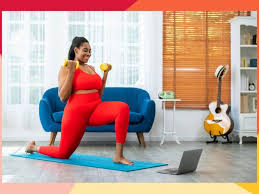
This guide is here to help. We’ll break down how to build a great home workout. We’ll cover different kinds of exercise.
You’ll learn what works best for women. You’ll get simple steps. You’ll feel more confident about starting and sticking with it.
A well-rounded home workout for women includes strength training to build muscle, cardio for heart health, and flexibility exercises for better movement. Focus on consistency and listening to your body to create a sustainable fitness plan. This approach helps improve overall health and well-being without needing gym equipment.
Understanding Home Workouts for Women
A home workout is just exercise done outside a gym. For women, this means focusing on moves that build strength. It also means boosting heart health.
And it means staying flexible. It’s about using what you have. This could be your body weight.
It could be simple things like water bottles or resistance bands.
The goal is not just looking a certain way. It’s about feeling good. It’s about having energy.
It’s about strong bones. It’s about a healthy heart. Women’s bodies change over time.
Hormones play a role. Strength training is super important for bone health as we get older. Cardio helps our hearts stay strong.
We want to build a routine that fits into your life. It should feel good. It should be something you can keep doing.
It’s not about quick fixes. It’s about long-term health.
Why Home Workouts Matter for Women
Let’s talk about why working out at home is so great. First, it saves time. No commute to the gym.
You can squeeze in a workout before coffee. Or during a lunch break. Or after the kids are in bed.
This makes it much easier to be consistent.
It’s also very practical. You don’t need expensive machines. Your own body is a great tool.
You can do squats. You can do push-ups. You can do lunges.
These moves work many muscles. You can add simple equipment later if you want. Things like dumbbells or bands are not too costly.
Privacy is another big plus. Some people feel shy in a gym. Working out at home means you can be yourself.
You can wear what you want. You can focus without distractions. You can just feel more comfortable.
This comfort helps you push yourself more.
Finally, home workouts are adaptable. Life happens. Some days you have more energy.
Some days you have less. You can change your workout. You can do a quick 15-minute session.
Or a longer one on a weekend. This flexibility is key to making it stick.
Strength Building: The Foundation
Why it’s key: Builds lean muscle. This speeds up your metabolism. It helps burn more calories even at rest.
Strong muscles also support your joints. This can prevent injuries.
Focus areas: Legs, glutes, back, chest, shoulders, arms, and core.
Example moves: Squats, lunges, push-ups, planks, glute bridges.
Building Your Strength Training Routine
Strength training is so important for women. It helps build muscle. More muscle means a faster metabolism.
That helps with weight management. It also makes your bones stronger. This is vital for preventing osteoporosis later in life.
You don’t need heavy weights to start. Your own body is a great tool. Think about moves like squats.
They work your legs and glutes. Lunges are also great for legs. Push-ups work your chest, shoulders, and arms.
If regular push-ups are hard, you can do them on your knees.
A strong core is also essential. A strong core helps with balance. It supports your back.
Planks are a fantastic core exercise. You hold your body straight like a board.
When you start, aim for 2-3 strength sessions a week. Let your muscles rest between sessions. You can do full-body workouts.
Or you can split them. For example, one day focus on legs and glutes. Another day focus on upper body and core.
How many reps and sets? For beginners, 10-15 repetitions (reps) is a good number. Do 2-3 sets of each exercise. This means you do the reps, rest, and then do them again.
Listen to your body. If something hurts, stop. It’s okay to modify moves. For example, if a squat feels too deep, don’t go as low.
The goal is to challenge yourself safely.
Progression is key. As you get stronger, you can make exercises harder. You can do more reps. You can do more sets.
You can add weight if you have dumbbells or resistance bands. You can also try harder variations of the moves. For instance, from knee push-ups to full push-ups.
Don’t forget your glutes! These muscles are the largest in your body. They help with posture and power. Glute bridges are simple but effective.
You lie on your back and lift your hips.
Focus on form. It’s better to do fewer reps with good form. Bad form can lead to injuries. Watch videos online to see how to do moves correctly.
Here is a sample beginner strength routine:
- Bodyweight Squats: 3 sets of 12 reps
- Push-ups (on knees or toes): 3 sets of as many reps as possible with good form (AMRAP)
- Walking Lunges: 3 sets of 10 reps per leg
- Glute Bridges: 3 sets of 15 reps
- Plank: 3 sets, hold for 30 seconds
- Bird-Dog: 3 sets of 10 reps per side
Rest for about 30-60 seconds between sets. Rest 1-2 minutes between different exercises.
Cardio for a Healthy Heart
Why it’s key: Improves cardiovascular health. Strengthens your heart and lungs. Helps manage weight.
Boosts mood and reduces stress.
How often: Aim for at least 150 minutes of moderate-intensity cardio per week. Or 75 minutes of vigorous-intensity cardio.
Examples: Brisk walking, jogging, dancing, cycling (if you have a bike), jumping jacks.
Incorporating Cardiovascular Exercise
Cardio, or aerobic exercise, is crucial for heart health. It strengthens your heart muscle. It makes your lungs work better.
This means more oxygen gets to your body. You will have more energy.
For women, consistent cardio is also important for bone health. It can help manage weight. It also has great mental health benefits.
It’s a natural mood booster. It can help you sleep better.
At home, you can do many cardio activities. Jumping jacks are a classic. They get your heart rate up quickly.
High knees are another good one. You run in place, lifting your knees high. Butt kicks involve kicking your heels towards your glutes.
Dancing is a fun way to get cardio. Put on your favorite music. Move your body!
You don’t need to be a pro dancer. Just enjoy the movement.
If you have stairs in your home, you can use them. Walking up and down stairs is great cardio. You can also do step-ups onto a sturdy chair or bench.
Brisk walking is excellent if you can do it outdoors. Even walking around your neighborhood counts. If weather is bad, you can walk in place indoors.
Marching in place for 30 minutes can be effective.
Intensity matters. Moderate intensity means you can talk but not sing. Vigorous intensity means you can only say a few words at a time. Aim for a mix.
How to structure it: You can do one longer cardio session. Or you can break it up into shorter bursts. Ten minutes here, ten minutes there.
This can add up.
Consider interval training. This means short bursts of high intensity. Followed by periods of lower intensity. For example, do jumping jacks hard for 30 seconds.
Then march in place for 60 seconds. Repeat this cycle.
Here are some home cardio ideas:
- Jumping Jacks: 30 seconds on, 30 seconds rest. Repeat 10 times.
- High Knees: 30 seconds on, 30 seconds rest. Repeat 10 times.
- Butt Kicks: 30 seconds on, 30 seconds rest. Repeat 10 times.
- Stair Climbing: 5-10 minutes.
- Dancing: Play a playlist and dance for 20-30 minutes.
- Indoor Walking/Marching: 20-30 minutes.
You can mix and match these. Or create your own circuit.
Flexibility and Mobility: Moving Freely
Why it’s key: Improves range of motion. Reduces stiffness and muscle soreness. Helps prevent injuries.
Enhances posture.
When to do it: After workouts, or as a separate session.
Examples: Static stretches (holding a stretch), dynamic stretches (moving through a range of motion), yoga poses.
The Importance of Flexibility and Mobility
Flexibility is your body’s ability to move. It’s about how far your muscles and joints can stretch. Mobility is about active movement.
It’s about moving your joints through their full range of motion. Both are super important for women.
As we age, or sit a lot, we can get stiff. This stiffness can lead to pain. It can make everyday tasks harder.
It can also increase your risk of injury. Think about reaching for something high. Or bending down to tie your shoes.
Good flexibility makes these easy.
Stretching after a workout is a great habit. It helps your muscles recover. It reduces that tight feeling.
Static stretches are best done when muscles are warm. You hold a stretch for 15-30 seconds. You should feel a gentle pull, not pain.
Dynamic stretches are good for warming up. They involve movement. Things like arm circles.
Leg swings. Torso twists. These get your blood flowing.
They prepare your body for exercise.
Yoga is a fantastic way to improve both flexibility and mobility. Many poses stretch muscles. They also build strength and balance.
You can find many free yoga videos online.
Here are some simple stretches to try:
- Hamstring Stretch: Sit on the floor with one leg extended. Reach towards your toes. Keep your back straight.
- Quad Stretch: Stand and pull one heel towards your glute. Keep your knees close together.
- Triceps Stretch: Reach one arm overhead. Bend your elbow. Use your other hand to gently push your elbow back.
- Shoulder Stretch: Bring one arm across your chest. Use your other arm to gently pull it closer.
- Cat-Cow Pose: On hands and knees, arch your back like a cat. Then drop your belly and lift your head like a cow.
- Child’s Pose: Kneel on the floor. Sit back on your heels. Fold your torso forward. Rest your forehead on the floor.
Hold static stretches for 15-30 seconds. Repeat each stretch 2-3 times.
Quick Cardio Burst: Jump Start Your Day
Goal: Get your heart rate up fast.
Duration: 5 minutes
Sequence:
- Minute 1: Marching in Place
- Minute 2: Jumping Jacks
- Minute 3: High Knees
- Minute 4: Butt Kicks
- Minute 5: Light Jogging in Place
Feeling: Slightly breathless, warm.
Designing Your Personal Home Workout Plan
Now you know the pieces. Let’s put them together. The best plan is one you will actually do.
Start small. Don’t try to do everything at once. Maybe start with 3 days a week. Each session could be 30-45 minutes.
Listen to your body. On days you feel tired, do a lighter workout. A walk or some gentle stretching. On days you feel strong, push yourself a bit more.
Mix it up. Doing the same thing every day can get boring. It also means some muscles might get overused. While others are neglected.
Alternate your focus.
Schedule it. Treat your workout like an important appointment. Put it in your calendar.
Find your motivation. What gets you moving? Is it music? Is it a show you watch while on a treadmill?
Is it a friend you text for accountability?
Track your progress. This doesn’t have to be complex. You can note down how many reps you did. Or how long you held a plank.
Seeing how far you’ve come is a great motivator.
Sample Weekly Plan (Beginner):
| Day | Focus | Activity |
|---|---|---|
| Monday | Strength (Full Body) | Bodyweight squats, push-ups, lunges, glute bridges, plank. 3 sets of 10-12 reps. |
| Tuesday | Cardio & Flexibility | 20 minutes of brisk walking or dancing. 10 minutes of stretching. |
| Wednesday | Rest or Active Recovery | Light stretching, a short walk, or just relax. |
| Thursday | Strength (Full Body) | Repeat Monday’s strength routine, maybe try for 1-2 more reps per set. |
| Friday | Cardio & Core | 15 minutes of interval training (jumping jacks, high knees). 5 minutes of core work (crunches, leg raises). |
| Saturday | Active Recovery or Fun Activity | Longer walk, bike ride, or a yoga session. |
| Sunday | Rest | Relax and prepare for the week ahead. |
As you get fitter, you can add more days. You can increase the duration or intensity. You might add weights or resistance bands.
Common Workout Mistakes to Avoid
Mistake: Not warming up.
Why it’s bad: Increases injury risk. Reduces workout effectiveness.
Fix: Do 5-10 minutes of light cardio and dynamic stretches.
Mistake: Doing too much too soon.
Why it’s bad: Leads to burnout and injuries.
Fix: Start slowly and gradually increase intensity and duration.
Mistake: Ignoring rest days.
Why it’s bad: Muscles need time to repair and grow.
Fix: Schedule at least 1-2 rest days per week.
Real-World Context: Making it Work at Home
I remember when I first started trying to work out at home. I felt so awkward. I didn’t have any fancy equipment.
My living room wasn’t a gym. I’d trip over the rug doing lunges. My dog would try to play tug-of-war with my resistance band.
It was chaos sometimes!
One day, I was trying to do push-ups. I was trying to keep my body straight. I wobbled.
I fell over. I felt like a failure. I wanted to quit right then.
But then I thought, “Okay, my living room isn’t perfect. My dog is a distraction. My body isn’t doing what I want it to.”
So, I changed my approach. I cleared a small space. I put the dog in another room for 20 minutes.
I accepted that my push-ups might not be perfect. I focused on just doing my best in that moment. I started with knee push-ups.
I didn’t worry about how many. I just focused on the movement.
What I learned was that perfection isn’t the goal. Progress is. And consistency.
Finding ways to adapt is key. Maybe you don’t have a big open space. You can do standing exercises.
Or exercises in a chair.
Home environment factors:
- Space: You don’t need a lot. A small clear area is enough.
- Flooring: A yoga mat helps with comfort and grip.
- Distractions: Try to minimize them. Tell family members you need quiet time. Put your phone on silent.
Habits that help:
- Consistency: Even short workouts are better than none.
- Routine: Doing it at the same time each day helps.
- Mindset: Focus on how good you feel afterwards, not just the effort during.
Materials:
- Bodyweight: Your own body is the best equipment.
- Optional extras: Resistance bands, dumbbells, a sturdy chair, a yoga mat.
User behavior:
- Listen to your body: Don’t push through sharp pain.
- Celebrate small wins: Every workout counts!
- Be patient: Results take time.
Workout Styles for Different Needs
Quick & Intense: HIIT (High-Intensity Interval Training). Great for busy days. Short bursts of maximum effort.
Mind & Body: Yoga, Pilates. Focus on flexibility, core strength, and breathing. Good for stress relief.
Strength Focused: Circuit training with bodyweight or weights. Aim to build muscle.
Low Impact: Walking, swimming (if available), gentle yoga. Easier on joints.
What This Means for You: When to Worry
Most of the time, working out at home is safe and beneficial. But it’s good to know what to watch out for.
When it’s normal:
- Muscle soreness the day after a workout (this is called DOMS – Delayed Onset Muscle Soreness). It usually feels like a dull ache.
- Feeling a little tired after a good cardio session.
- A little sweat!
- Feeling challenged but able to complete the movements.
When to worry:
- Sharp pain during or after exercise. This is not normal muscle soreness. Stop immediately if you feel sharp pain.
- Joint pain that doesn’t go away.
- Dizziness or nausea that is severe or persistent. A little lightheadedness from intense exercise can happen, but it should pass quickly.
- Breathing difficulties that are more than just being out of breath from exertion.
- Persistent fatigue that doesn’t improve with rest.
Simple checks:
- Before you start: Are you feeling well? Do you have any injuries? If you have health concerns, it’s always best to talk to your doctor. Especially if you haven’t exercised in a while or have a chronic condition. The U.S. Department of Health and Human Services recommends consulting a doctor before starting any new exercise program.
- During the workout: Are you listening to your body? Are you using good form? Are you drinking water?
- After the workout: How do you feel? Does the soreness feel normal, or is it excessive?
If you are unsure about any pain or persistent symptoms, please see a healthcare professional. They can give you personalized advice.
Quick Tips for Success
Stay Hydrated: Drink water before, during, and after workouts.
Fuel Your Body: Eat a balanced diet to support your energy levels and recovery.
Wear Supportive Shoes: Even for home workouts, good shoes can help.
Focus on Form: It’s better to do fewer reps perfectly than many with poor form.
Be Patient: Results take time. Stick with it!
Quick Fixes and Helpful Tips
Sometimes, you just need a little nudge. Here are some tips to make your home workouts easier and more effective.
1. Make your space inviting. You don’t need a fancy gym. But a clean, clear space helps.
Maybe add a plant. Or play some uplifting music. Make it a place you want to be.
2. Schedule it like an appointment. If it’s in your calendar, you’re more likely to do it. Treat it with the same importance as a doctor’s visit.
3. Have your workout clothes ready. Lay them out the night before. This removes one barrier to starting.
4. Use music or podcasts. This can make time fly. It can also boost your motivation.
Create playlists for different types of workouts.
5. Find a workout buddy. Even if they live far away. You can text each other for support.
Or do a video call workout together.
6. Track your progress. Write down your workouts. Note how you felt.
Seeing how far you’ve come is a powerful motivator.
7. Don’t aim for perfection. Aim for consistency. Some days will be better than others.
Just showing up is a win.
8. Invest in a few key pieces of equipment. If your budget allows, resistance bands are great. They are cheap and versatile.
A good yoga mat is also a worthwhile investment.
9. Learn proper form. Watch videos. You can even film yourself to check your technique.
This prevents injuries.
10. Celebrate milestones. Did you complete a week of workouts? Did you increase your plank time?
Give yourself a small reward.
Frequently Asked Questions About Home Workouts for Women
How many days a week should a woman work out at home?
For general health, aiming for 3-5 days a week is often recommended. This can include a mix of strength training, cardio, and flexibility exercises. Listen to your body and include rest days.
Do I need any special equipment to start working out at home?
No, you don’t need special equipment to start. Your body weight is enough for many effective exercises. As you progress, you might consider resistance bands or light dumbbells.
How long should a home workout session be?
Even 20-30 minutes can be beneficial. Consistency is more important than duration. You can break up your workouts into shorter sessions if needed throughout the day.
Is it okay to feel sore after a home workout?
Yes, mild to moderate muscle soreness (DOMS) is normal, especially when you’re new to an exercise or trying a new move. It usually goes away within a day or two. Sharp pain is not normal and means you should stop.
How can I stay motivated to work out at home?
Stay motivated by setting realistic goals, tracking your progress, finding an accountability partner, making your workouts enjoyable with music, and focusing on how good you feel after exercising.
What are the best home exercises for beginners?
Great beginner exercises include bodyweight squats, lunges, push-ups (on knees if needed), planks, glute bridges, and brisk walking or marching in place for cardio. Focus on learning the proper form.
Can home workouts help with weight loss?
Yes, home workouts can definitely contribute to weight loss when combined with a healthy diet. Strength training builds muscle, which boosts metabolism, and cardio burns calories.
Conclusion
Building a home workout routine is a journey. It’s about finding what works for you. It’s about being kind to your body.
You have the power to make positive changes. Start today. Your body will thank you for it.

Leave a Reply