Single Dumbbell Workout
A single dumbbell workout can provide a comprehensive full-body fitness routine by engaging multiple muscle groups through compound and isolation exercises, promoting strength, balance, and cardiovascular health without needing extensive gym equipment.
The Surprising Power of a Single Dumbbell
You might look at a single dumbbell and think, “How much can I really do with this?” The answer is: a lot. For decades, athletes and fitness enthusiasts have used single dumbbells to build incredible physiques and functional strength. The key is understanding how to use it correctly and focusing on exercises that work multiple muscles at once.
When you use just one dumbbell, your body has to work harder to stabilize itself. This means your core muscles, and smaller stabilizer muscles, get a great workout too. This kind of training is fantastic for improving balance and preventing injuries.
It’s also incredibly efficient. You can get a full-body burn in a shorter amount of time.
Think about it: many everyday tasks involve using one side of your body more than the other. Carrying groceries, picking up a child, or even reaching for something on a high shelf. Training with a single dumbbell helps to correct muscle imbalances that can develop from these daily activities.
It promotes more symmetrical strength development.
My First Single Dumbbell Experience
I remember when I first started getting serious about fitness. I was living in a small apartment with no room for big machines or even a full set of weights. I bought a single adjustable dumbbell, thinking it was a compromise.
I figured it would be okay for a few arm exercises, but I didn’t expect much more. Boy, was I wrong. One evening, feeling a bit uninspired, I decided to just try a few things with my solitary dumbbell.
I started with a dumbbell clean and press, thinking it was just a shoulder exercise. But my whole body fired up! My legs, my back, my core – they all had to work to lift and control the weight.
Then I tried a single-arm row. My back muscles screamed, but in a good way. I ended up doing goblet squats, lunges, and even some challenging single-leg deadlifts.
By the end of that short session, I was sweating buckets and felt muscles I hadn’t even thought about. It was a true revelation. I realized that you don’t need a lot of fancy equipment to have a killer workout.
Sometimes, less is definitely more.
Single Dumbbell Workout Essentials
Weight Selection: Start with a weight that challenges you but allows for good form. You might need one weight for squats and a lighter one for curls. Adjustable dumbbells are great for this!
Form Over Weight: Always prioritize correct posture and movement. A poorly done rep is worse than no rep at all.
Listen to Your Body: Rest when needed. Don’t push through sharp pain.
Building Your Single Dumbbell Routine: Key Exercises
To get the most out of a single dumbbell, we need to focus on exercises that are effective and safe. These movements will target your whole body, from your toes to your head. We want to make sure we hit all the major muscle groups.
Here are some of the best exercises you can do with just one dumbbell. We’ll cover movements for your legs, chest, back, shoulders, arms, and core. This will help you build a balanced and strong physique.
Remember, the goal is to move well and feel the muscles working.
Lower Body Power
Your legs are your foundation. Strong legs help with almost every physical activity you do. We can work them effectively with a single weight.
- Goblet Squat: Hold the dumbbell vertically against your chest with both hands. Stand with your feet shoulder-width apart. Lower down as if sitting in a chair, keeping your chest up and back straight. Go as low as you can comfortably. Push back up through your heels. This is a great squat variation that also works your core and upper back for stability.
- Dumbbell Lunges: Hold the dumbbell in one hand. Step forward with one leg, lowering your hips until both knees are bent at about a 90-degree angle. Your front knee should be directly over your ankle, and your back knee should be close to the floor. Push off your back foot to return to the starting position. Alternate legs. You can also hold the dumbbell in both hands.
- Dumbbell Romanian Deadlift (RDL): Hold the dumbbell in front of your thighs. Stand tall with a slight bend in your knees. Keeping your back straight and chest up, hinge at your hips, lowering the dumbbell down your shins. You should feel a stretch in your hamstrings. Squeeze your glutes to pull yourself back up to a standing position. This exercise is excellent for hamstrings and glutes.
- Single-Leg Romanian Deadlift: This is a more advanced version. Hold the dumbbell in the hand opposite to the leg you’re standing on. As you hinge at the hips, extend your free leg straight back behind you. Keep your core tight and balance on one leg. Lower the dumbbell until it’s near the floor. Return to the start by squeezing your glutes. This really challenges your balance and hamstring strength.
Upper Body Strength
Now, let’s move up to your chest, back, and shoulders. These are crucial for posture, pushing, pulling, and overhead movements.
- Dumbbell Bench Press (Floor Press): Lie on your back on the floor. Hold the dumbbell in one hand, arm extended towards the ceiling. Lower the dumbbell towards your chest, keeping your elbow slightly tucked. Push the dumbbell back up. This is a great alternative to a bench press if you don’t have a bench. You can also do this with one dumbbell in each hand if you have two.
- Single-Arm Dumbbell Row: Place one knee and one hand on a stable surface (like a sturdy chair or bench). Let the dumbbell hang straight down from your other hand. Pull the dumbbell up towards your chest, squeezing your shoulder blade. Keep your back straight. Lower it back down slowly. This targets your lats and upper back muscles effectively.
- Dumbbell Overhead Press (Standing or Seated): Hold the dumbbell at shoulder height, palm facing forward. Press the dumbbell straight up overhead until your arm is fully extended. Lower it back down slowly. This works your shoulders and triceps. Standing engages your core more for stability.
- Dumbbell Front Raise: Hold the dumbbell with an overhand grip in front of your thighs. Keeping your arm mostly straight (a slight bend is okay), raise the dumbbell forward until your arm is parallel to the floor. Lower it back down with control. This focuses on the front of your shoulder.
- Dumbbell Lateral Raise: Hold the dumbbell in your hand by your side, palm facing your body. With a slight bend in your elbow, raise the dumbbell out to the side until your arm is parallel to the floor. Lower it slowly. This targets the side (deltoid) muscles of your shoulders, helping to build width.
- Dumbbell Bicep Curl: Hold the dumbbell in your hand, arm extended by your side, palm facing forward. Curl the dumbbell up towards your shoulder, keeping your elbow tucked in. Squeeze your bicep at the top. Lower it back down slowly.
- Dumbbell Hammer Curl: This is similar to a bicep curl, but you keep your palm facing your body throughout the movement (like you’re holding a hammer). This works the bicep and also the brachialis muscle underneath.
- Dumbbell Triceps Extension (Overhead): Hold the dumbbell with both hands and extend it straight overhead. Keeping your elbows close to your head, lower the dumbbell behind your head by bending your elbows. Extend your arms back up to the starting position. This is great for the back of your arm.
Core Strength and Stability
A strong core is vital for everything. It protects your spine and helps you perform all other movements better.
- Dumbbell Russian Twists: Sit on the floor with your knees bent and feet flat or slightly raised. Hold the dumbbell with both hands in front of your chest. Lean back slightly, keeping your back straight. Twist your torso from side to side, tapping the dumbbell on the floor on each side. This works your obliques.
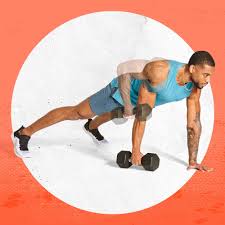
- Dumbbell Plank: Get into a plank position with your hands on the floor. Place a dumbbell on the floor just to one side of your hand. Reach across with the opposite hand, grab the dumbbell, and pull it back to your side. Then, switch sides and repeat. This is a fantastic exercise for core stability and shoulder strength.
- Dumbbell Side Bends: Stand tall with your feet hip-width apart. Hold the dumbbell in one hand. Keeping your body straight, bend to the side of the dumbbell, feeling a stretch in your obliques. Return to the upright position. Repeat on the other side.
Putting It Together: A Sample Single Dumbbell Circuit
Here’s how you might combine these for a great workout. Do 10-12 reps of each exercise, move from one to the next with minimal rest. After completing all exercises, rest for 1-2 minutes and repeat the circuit 3-4 times.
- Circuit Round:
- Goblet Squats
- Dumbbell Floor Press
- Single-Arm Dumbbell Row (perform for one side, then switch sides)
- Dumbbell Overhead Press
- Dumbbell Romanian Deadlift
- Dumbbell Russian Twists
This circuit hits major muscle groups and keeps your heart rate up.
The Real-World Benefits of Single Dumbbell Training
Why should you bother with a single dumbbell when there are so many other options? Because it offers unique advantages that other forms of training might miss. It’s about building functional strength that translates directly into your daily life.
One of the biggest benefits is correcting muscular imbalances. Most people have a dominant side. If you always do exercises with two dumbbells or machines, your dominant side might become even stronger.
Training with a single dumbbell forces your weaker side to catch up. This leads to better posture and can help prevent injuries caused by uneven strength.
Another benefit is the core engagement. When you lift a weight on one side of your body, your core muscles have to work overtime to keep you upright and stable. This is called anti-rotation and anti-lateral flexion.
These are crucial skills for everyday movements and for protecting your spine.
Think about carrying a heavy bag of groceries in one hand. Your body has to stabilize itself. A single dumbbell workout mimics this, preparing you for real-life challenges.
It’s practical fitness.
My Experience with Imbalances
A few years back, I noticed my right shoulder was starting to feel a bit tight after my workouts. I used two dumbbells for most of my upper body work, and I realized I was probably favoring my right side without even knowing it. My right bicep even looked a little bigger than my left!
It wasn’t a huge difference, but it was there. This is where the single dumbbell really came into its own for me. I started incorporating more single-arm rows, single-arm presses, and even single-arm curls.
I made sure to focus on controlled movements and really feel the contraction in my weaker side. Over time, I noticed a huge improvement. The tightness in my right shoulder eased up, and the size difference between my arms became much less noticeable.
My posture improved too, and I felt more balanced overall. It was a clear lesson that sometimes, focusing on just one side can bring incredible symmetry and strength.
Single Dumbbell vs. Two Dumbbells: What’s the Difference?
Balance: Single dumbbell training requires more core and stabilizer muscle engagement to counteract the uneven load.
Imbalance Correction: It’s excellent for identifying and fixing muscular imbalances between your left and right sides.
Proprioception: It can improve your body’s awareness of its position in space, leading to better coordination.
Simplicity: Easier to manage and store if space is limited.
Making It Work for You: Practical Tips
Now that you know the exercises, how do you make this a sustainable part of your fitness routine? It’s all about smart planning and listening to your body.
Progression: As you get stronger, you’ll need to make the workouts harder. You can do this by increasing the weight of the dumbbell. If you have an adjustable dumbbell, this is easy.
If not, you can increase the number of repetitions, add more sets, or decrease rest times. You can also try more challenging variations of the exercises, like single-leg movements.
Consistency is Key: Aim to do your single dumbbell workout 2-4 times a week. Consistency is far more important than intensity when you’re starting out. Even short, regular workouts will yield results.
Warm-up and Cool-down: Never skip these. A good warm-up prepares your muscles for exercise and reduces injury risk. A cool-down helps your body recover.
Nutrition and Hydration: These are the other pillars of fitness. Make sure you’re eating well and drinking enough water. Your body needs fuel to perform and recover.
Variety: While the core exercises are great, don’t be afraid to swap them out now and then. Look for new single-dumbbell exercises to keep things interesting. Websites and fitness apps can offer fresh ideas.
Understanding Progressive Overload
To keep getting stronger, you need to challenge your muscles. This is called progressive overload. With a single dumbbell, you can achieve this by:
- Increasing Weight: Use a heavier dumbbell.
- Increasing Reps: Do more repetitions per set.
- Increasing Sets: Add more sets to your workout.
- Decreasing Rest: Take shorter breaks between sets.
- Improving Form: Perform the exercise with more control.
- Increasing Range of Motion: Go deeper in squats or RDLs.
When to Worry: Recognizing Potential Issues
While single dumbbell workouts are generally safe and beneficial, it’s important to know when something might be off. Your body will often tell you if you’re pushing too hard or doing something wrong.
Pain vs. Soreness: Muscle soreness after a workout is normal. It’s a sign that your muscles are adapting.
Sharp, stabbing, or joint pain is not normal. If you feel this type of pain, stop the exercise immediately. Don’t try to work through it.
Form Breakdown: If you find yourself losing good form just to lift the weight, it’s a sign the weight is too heavy or you’re too tired. Stick to a weight you can control throughout all the repetitions.
Persistent Fatigue: If you feel excessively tired for days on end and it’s not improving with rest, you might be overtraining. Ensure you’re getting enough sleep and proper nutrition.
Dizziness or Nausea: If you feel dizzy, lightheaded, or nauseous during or after a workout, it could be a sign of dehydration, low blood sugar, or pushing too hard. Take a break, drink some water, and if it persists, consult a doctor.
It’s always a good idea to consult with a doctor or a certified personal trainer before starting any new exercise program, especially if you have any underlying health conditions. They can help you tailor a program that’s safe and effective for you.
Frequently Asked Questions About Single Dumbbell Workouts
Can I really get a full-body workout with just one dumbbell?
Yes! By choosing a variety of exercises that target different muscle groups, you can absolutely achieve a comprehensive full-body workout with a single dumbbell. The key is to focus on compound movements and ensuring you work opposing muscle groups.
How heavy should my dumbbell be?
The ideal weight depends on your current fitness level and the specific exercise. For compound movements like squats and lunges, you’ll need a heavier weight. For isolation exercises like bicep curls, a lighter weight is often sufficient.
Start with a weight that allows you to complete 10-12 repetitions with good form, feeling challenged by the last few reps.
How often should I do a single dumbbell workout?
For most people, working out 2 to 4 times per week is a good starting point. Allow at least one rest day between workouts targeting the same muscle groups. You can do full-body workouts each session, or split them up by focusing on different body parts on different days.
What are the best single dumbbell exercises for beginners?
For beginners, focusing on foundational movements is best. Good starting exercises include: Goblet Squats, Dumbbell Floor Press, Single-Arm Dumbbell Rows, Dumbbell Overhead Press (seated is easier to start), and Dumbbell Romanian Deadlifts. These cover major muscle groups and are relatively easy to learn with good form.
Can I build muscle size (hypertrophy) with just one dumbbell?
Yes, you can build muscle size. To achieve hypertrophy, you need to challenge your muscles consistently and provide them with adequate protein and rest. With a single dumbbell, you’ll need to focus on progressive overload by increasing reps, sets, decreasing rest, or using more challenging exercise variations.
Progressive overload is the main driver of muscle growth, regardless of the equipment.
Is a single dumbbell good for weight loss?
Absolutely. A single dumbbell workout can be very effective for weight loss. By performing compound exercises and circuit training, you can burn a significant number of calories during your workout and boost your metabolism for hours afterward.
Combining this with a healthy diet is key for effective weight management.
Conclusion: Embrace the Simplicity
Don’t let limited equipment hold you back from your fitness goals. The single dumbbell is a powerful, versatile tool that can deliver incredible results. It encourages balance, strengthens your core, and builds functional strength.
Embrace the simplicity, focus on proper form, and you’ll be amazed at what you can achieve. Your journey to a stronger, healthier you is just one dumbbell away!

Related Posts
Quick Workout Before Work
15 Minute Home Workout