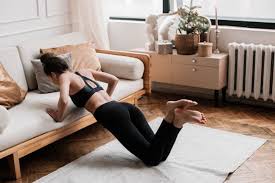
Full Body Workout No Equipment
You can achieve a comprehensive full body workout with no equipment by focusing on bodyweight exercises that target major muscle groups. This includes movements like squats, push-ups, lunges, planks, and burpees, which build strength and improve cardiovascular health efficiently.
The Power of Bodyweight Training
Your body is an amazing tool. It has the power to build muscle and burn fat. You don’t need fancy machines.
Or heavy weights. Just your own weight. And a little space.
Bodyweight training is ancient. It’s been used for centuries. Athletes and soldiers used it.
It builds functional strength. This means strength you can use every day. Lifting groceries.
Playing with kids. Climbing stairs. It also improves your balance.
And your coordination. This is key for preventing injuries. Plus, you can do it anywhere.
Your living room. A park. A hotel room.
Think about it. Every movement we do uses our body weight. Walking.
Running. Jumping. These are natural movements.
Bodyweight exercises train these movements. They help your body work as a unit. It’s not just about isolated muscles.
It’s about how they work together. This makes your body more efficient. It’s also incredibly adaptable.
You can change the difficulty. You can change the speed. You can change the form.
This keeps your body guessing. It keeps you from hitting a plateau.
Many people think you need weights to build muscle. That’s not entirely true. Your muscles need resistance.
Your body weight provides that resistance. As you get stronger, you can make exercises harder. You can do more reps.
Or slower reps. You can add pauses. You can change angles.
This keeps challenging your muscles. This is what signals them to grow. It’s a simple principle.
But it’s very effective. Building strength this way is sustainable. It builds a strong foundation.
For whatever fitness goals you have.
Personal Experience: The Accidental Traveler’s Workout
I remember one trip. It was last spring. I was supposed to be in a small town for work.
My hotel had a tiny gym. But it was closed for repairs. My flight got delayed for two days.
I was stuck. My usual gym routine was impossible. I felt a pang of panic.
I’d miss my workouts. My energy would dip. I’d feel sluggish.
I sat in my hotel room. I looked around. There was just a bed.
A chair. A small table. That was it.
No weights. No bands. Nothing.
Then I remembered. My own advice. I always tell people they can work out anywhere.
And here I was. Not doing it. I stood up.
I cleared some space. I started with some jumping jacks. Just to get my heart going.
Then I did squats. Bodyweight squats. I focused on going deep.
My thighs burned. Then push-ups. I did them on my knees at first.
My chest and arms felt the effort. I did lunges. Forward.
Backward. My legs wobbled a bit. I finished with planks.
Holding that core tight. It felt amazing.
By the end, I was sweating. My muscles felt tired. But in a good way.
I had a full body workout. With absolutely zero equipment. It wasn’t as intense as my gym sessions.
But it was enough. It kept me moving. It kept me feeling good.
It showed me just how powerful the human body is. And how versatile bodyweight training can be. That experience stuck with me.
It’s a reminder that fitness is not about the equipment. It’s about the effort and consistency.
Bodyweight Basics: Your Go-To Moves
Squats: Stand with feet shoulder-width apart. Lower your hips as if sitting in a chair. Keep your chest up and back straight.
Go as low as you can comfortably. Push back up through your heels. This works your legs and glutes.
Push-Ups: Start on your hands and knees or hands and toes. Place hands slightly wider than shoulder-width. Lower your chest toward the floor.
Keep your body in a straight line. Push back up. This works your chest, shoulders, and triceps.
Lunges: Step forward with one leg. Lower your hips until both knees are bent at about 90 degrees. Your front knee should be over your ankle.
Your back knee should hover near the floor. Push off your front foot to return to the start. Alternate legs.
This targets your quads, hamstrings, and glutes.
Plank: Get into a push-up position. Then lower onto your forearms. Keep your body in a straight line from head to heels.
Engage your core. Hold this position. This is great for your core muscles.
Glute Bridges: Lie on your back with knees bent and feet flat on the floor. Lift your hips off the ground. Squeeze your glutes at the top.
Lower slowly. This focuses on your glutes and hamstrings.
Structuring Your No-Equipment Full Body Workout
A good workout hits all the major muscle groups. You want to work your legs. Your chest.
Your back. Your arms. And your core.
You can do this with just a few key exercises. The goal is to create a circuit. You do one exercise after another.
With minimal rest. This keeps your heart rate up. It makes it a cardio workout too.
It’s efficient.
Let’s talk about sets and reps. For strength, you might do fewer reps. With more effort.
For endurance, you might do more reps. Or hold poses longer. For a full body workout, a mix is good.
Aim for 3 to 4 sets of each exercise. For reps, try 10 to 15. If an exercise is very hard, do as many as you can with good form.
If it’s easy, do more. Or try a harder variation.
Rest is important. But not too much rest in a circuit. Maybe 30 to 60 seconds between sets.
Or between exercises. If you’re doing a circuit, you might only rest after you’ve done all the exercises. Then repeat the whole circuit.
This is called a circuit training style. It keeps the intensity high. It’s a great way to maximize your time.
And your effort.
Workout Structure Example: The “Express” Full Body
Warm-up (5 minutes): Light cardio like jogging in place, jumping jacks. Arm circles, leg swings.
Circuit (Repeat 3-4 times):
- Bodyweight Squats: 15 reps
- Push-Ups (on knees or toes): 10-12 reps
- Walking Lunges: 10 reps per leg
- Plank: Hold for 30-60 seconds
- Glute Bridges: 15 reps
- Jumping Jacks: 30 seconds
Rest: 60-90 seconds between circuits.
Cool-down (5 minutes): Static stretches for major muscle groups. Hold each stretch for 20-30 seconds.
Legs: The Foundation of Your Body
Your legs are your powerhouse. They support your entire body. Strong legs help with posture.
They improve your athletic performance. And they burn a lot of calories. Squats are the king of leg exercises.
There are many variations. You can do regular squats. You can do sumo squats.
These are wider stances. They hit your inner thighs more. You can do jump squats.
These add a cardio element. And make them harder.
Lunges are another fantastic exercise. They work each leg independently. This helps balance out muscle imbalances.
You can do forward lunges. You can do reverse lunges. Reverse lunges are often easier on the knees.
You can also do side lunges. These work your inner and outer thighs. And your glutes.
Remember to keep your knee aligned with your ankle. Don’t let it cave inward.
Calf raises are simple but effective. Stand on a flat surface. Or on the edge of a step for a deeper stretch.
Rise up onto your toes. Hold briefly. Lower back down.
This targets your calf muscles. Your hamstrings and glutes are worked in squats and lunges. Glute bridges are excellent for glute activation.
They help build a strong posterior chain. This is important for back health and power.
Leg Workout Enhancements (No Equipment Needed!)
Increase Reps: If 15 squats feel easy, try 20 or 25.
Slow Down: Take 3-4 seconds to lower into your squat. Hold at the bottom for 1-2 seconds. Then slowly come up.
Add Pauses: Pause at the bottom of your lunge for a moment before pushing up.
Tempo Changes: Do your squats faster on the way up and slower on the way down.
Single Leg Work: Try pistol squats (advanced) or single leg Romanian deadlifts (focus on balance and hamstring stretch).
Upper Body: Building a Stronger Torso and Arms
Push-ups are your best friend for upper body strength. They work your chest. Your shoulders.
Your triceps. If regular push-ups are too hard, start on your knees. Or do them against a wall.
Or a sturdy table. As you get stronger, progress to a full push-up. Keep your body straight.
Don’t let your hips sag. Or pike up.
Variations of push-ups can target different muscles. Wide push-ups hit your chest more. Narrow push-ups (or diamond push-ups) hit your triceps more.
Incline push-ups (hands on a higher surface) are easier. Decline push-ups (feet on a higher surface) are harder. They work your shoulders more.
For your back, bodyweight rows can be tricky without equipment. But you can use a sturdy table. Or two chairs with a broomstick.
Lie underneath the table. Grab the edge. Pull your chest toward the table edge.
Keep your body straight. Another option is Superman holds. Lie on your stomach.
Extend your arms overhead. Lift your arms, chest, and legs off the floor. Hold.
This works your lower back and glutes.
Dips are great for triceps and chest. You can do them between two sturdy chairs. Or on the edge of a stable couch.
Sit between the chairs. Place hands on the edge. Slide your hips forward.
Lower your body down. Then push back up. Keep your back close to the chairs.
This works the back of your arms.
Upper Body Progressions (Make it Harder!)
Push-Up Variations: Try clap push-ups, archer push-ups, or one-arm push-ups (advanced).
Tempo Control: Slowly lower yourself during a push-up (4-5 seconds). Pause at the bottom. Explode up.
Plyometric Push-Ups: Push off the ground with enough force to lift your hands. Try to clap your hands mid-air. Land softly.
Bodyweight Rows: Use a low table or sturdy railing. Lie underneath. Pull your chest towards the edge.
Keep your body stiff.
Pike Push-Ups: Get into a downward dog position. Bend your elbows to lower your head towards the floor. This targets your shoulders.
Core Strength: The Center of Your Universe
A strong core is essential. It’s not just about six-pack abs. It supports your spine.
It helps with balance. It makes all other movements better. Planks are a fantastic exercise for the core.
A standard plank works your entire core. Including your abs. Your obliques.
And your lower back.
To make planks harder, you can do variations. Side planks work your obliques. You can lift one leg or arm in a plank.
You can do plank jacks. These are like jumping jacks but in a plank position. You can do mountain climbers.
In a plank position, bring one knee toward your chest. Then switch legs quickly. This is a great cardio and core move.
Crunches are a classic. Lie on your back. Knees bent.
Feet flat. Lift your shoulders off the floor. Focus on squeezing your abs.
Don’t pull on your neck. Bicycle crunches are another good option. Lie on your back.
Bring one knee toward your chest. Twist your torso. Bring your opposite elbow toward that knee.
Alternate sides. This works your obliques really well.
Leg raises are good for your lower abs. Lie on your back. Legs straight.
Lift your legs off the floor. Keep them as straight as possible. Lower them slowly.
Don’t let your lower back arch. If it does, bend your knees slightly.
Core Challenge Variations
Plank to Downward Dog: Start in a plank. Push back into a downward dog position. Return to plank.
Repeat.
Russian Twists: Sit on the floor. Lean back slightly. Lift your feet off the ground (optional).
Twist your torso from side to side. Touch the floor with your hands on each side.
Dead Bug: Lie on your back. Knees bent at 90 degrees. Arms extended to the ceiling.
Slowly extend one arm back and the opposite leg forward. Keep your lower back pressed into the floor. Return to start.
Alternate sides.
Flutter Kicks: Lie on your back. Lift your legs slightly off the floor. Make small, rapid up-and-down kicking motions.
Cardio: Getting Your Heart Pumping
You don’t need a treadmill for cardio. Many bodyweight exercises are great for getting your heart rate up. Jumping jacks are a classic for a reason.
Burpees are a full-body cardio blast. They combine a squat, a push-up, and a jump. They are tough but very effective.
High knees involve running in place. Bringing your knees up as high as possible.
Butt kicks involve running in place. Bringing your heels up towards your glutes. Jumping rope is excellent cardio.
Even without a rope, you can mimic the motion. Shadow boxing is another option. It’s a great workout for your shoulders and cardio.
Jumping squats and jumping lunges add a plyometric element. That significantly increases the cardio demand.
Interval training is perfect for bodyweight cardio. Alternate between high-intensity bursts of exercise. And short recovery periods.
For example, do burpees for 30 seconds. Then rest for 30 seconds. Repeat this for several rounds.
This is called HIIT – High-Intensity Interval Training. It’s very efficient for burning calories. And improving cardiovascular fitness.
Cardio Burst Ideas
Burpee Challenge: Set a timer for 1 minute. See how many burpees you can do with good form.
Jumping Jack Pyramid: Start with 10 jumping jacks. Then do 20. Then 30.
Then back down to 20, then 10.
Mountain Climber Race: See how many mountain climbers you can do in 1 minute.
Sprints in Place: Sprint as fast as you can in place for 20 seconds. Rest for 10 seconds. Repeat 8 times.
Jump Squat Intervals: Perform 10 jump squats. Rest for 30 seconds. Repeat 5 times.
Real-World Context: Making it Work for You
The beauty of a no-equipment workout is its flexibility. You can do it in your living room. While your kids play.
You can do it in a hotel room. When you’re on a business trip. You can do it in a park on a sunny day.
The environment doesn’t have to be a barrier.
Habits are key. Consistency is more important than intensity. Doing a short workout every day is better than one long workout once a week.
Find a time that works for you. Morning. Lunch break.
Evening. Schedule it like any other appointment. Make it a priority.
Small habits build big results over time.
Consider your space. You don’t need a huge area. Just enough to extend your arms and legs.
Make sure the floor is not slippery. Maybe use a yoga mat if you have one. But it’s not essential.
Your own body is the equipment. Your commitment is the most important factor.
User behavior is critical. Are you motivated? Are you disciplined?
Bodyweight training requires a mental commitment. You have to push yourself. Because there’s no external weight to tell you it’s hard.
You have to listen to your body. And know when to push harder. And when to rest.
Workout Location & Time Ideas
Morning Boost: A quick 20-minute circuit before breakfast to energize your day.
Lunch Break Burn: A 30-minute workout to break up your workday and clear your head.
Evening Wind-Down: A 45-minute session to release stress and prepare for sleep.
Travel Buddy: Pack a workout in your mind. Do it in your hotel room or a nearby park.
Outdoor Fitness: Utilize park benches for dips or step-ups. Use stairs for cardio.
When is it Normal, and When Should You Worry?
It’s normal to feel some muscle soreness after a workout. Especially if you’re new to it. Or trying new exercises.
This is called DOMS – Delayed Onset Muscle Soreness. It usually peaks 24-48 hours after. It means your muscles are recovering and getting stronger.
Light stretching and movement can help.
It’s normal to feel tired after a workout. But you shouldn’t feel completely drained. Or dizzy.
Or nauseous. If you experience sharp pain during an exercise, stop immediately. Pushing through sharp pain can cause injury.
Listen to your body. It’s telling you something.
You should worry if you feel persistent, sharp, or shooting pain. If you experience joint pain that doesn’t go away. If you feel extreme fatigue that lasts for days.
If you have shortness of breath that is unusual. Or if you have any underlying health conditions that might be aggravated. It’s always wise to check with your doctor before starting any new exercise program.
Especially if you have any health concerns.
A good workout should leave you feeling energized. Or at least accomplished. Not sick or injured.
Pay attention to how your body feels. Not just during the workout. But after it.
And the next day. This feedback is crucial.
Quick Checks for Your Workout
Pain vs. Soreness: Sharp pain needs immediate stop. General muscle ache is okay.
Energy Levels: Feeling good post-workout? Great! Feeling wiped out for hours?
Maybe too much too soon.
Form Check: Are you doing the exercises correctly? Bad form can lead to injury.
Breathing: Can you breathe reasonably well during your workout? Extreme breathlessness is a warning sign.
Joint Health: Are your joints complaining? This could mean improper form or too much intensity.
Quick Tips for Maximum Results
Focus on Form: Always prioritize good form over speed or number of reps. This prevents injury and ensures you’re working the right muscles.
Progress Gradually: Don’t try to do too much too soon. As you get stronger, increase reps, sets, or try harder variations.
Stay Hydrated: Drink water before, during, and after your workout. This is crucial for performance and recovery.
Eat Well: Your diet plays a huge role in muscle recovery and energy levels. Focus on whole foods.
Listen to Your Body: Rest days are as important as workout days. Don’t push through serious pain.
Consistency is Key: Aim for regular workouts. Even short ones add up over time. Find a schedule you can stick to.
Vary Your Routine: Change up your exercises every few weeks. This keeps your body challenged and prevents boredom.
Mind-Muscle Connection: Focus on the muscles you’re working. Squeeze them. Feel the contraction.
Frequently Asked Questions
How many times a week should I do a full body workout with no equipment?
For best results, aim for 3 to 4 times per week. This allows for adequate rest and recovery between sessions, which is crucial for muscle repair and growth. You can also add lighter activity or active recovery on off days.
Can I really build muscle with just bodyweight exercises?
Yes, you absolutely can build muscle with bodyweight exercises! Your muscles respond to resistance. As you get stronger, you can increase the difficulty of bodyweight exercises through higher reps, slower tempos, shorter rest periods, or more challenging variations.
This progressive overload is key to muscle growth.
What if I can’t do a standard push-up yet?
Don’t worry! Start with easier variations like knee push-ups, incline push-ups (hands on a wall, table, or chair), or push-ups against a sturdy counter. As your strength improves, gradually progress to more challenging forms.
The key is to keep practicing with good form.
How long should my no-equipment workout be?
A full body workout with no equipment can be very effective even if it’s short. Aim for 20 to 45 minutes. Including a warm-up and cool-down, this can provide a comprehensive session.
The intensity and structure of your workout are often more important than the duration.
Do I need any special gear for a no-equipment workout?
No special gear is required! The beauty of bodyweight training is its accessibility. Comfortable clothing and a clear space are all you need.
A yoga mat can add comfort for floor exercises, but it’s entirely optional. Your own body is the only equipment you need.
What are the best bodyweight exercises for beginners?
For beginners, focus on fundamental movements with good form: bodyweight squats, knee push-ups, lunges, planks, and glute bridges. Start with fewer reps and sets, and gradually increase as you feel stronger. Consistency is more important than high intensity when you’re starting out.
Putting It All Together
A full body workout with no equipment is a powerful tool. It’s accessible. It’s effective.
And it’s adaptable. You can build strength. Improve your cardiovascular health.
And boost your overall fitness. Without ever leaving your home. Or spending money on a gym membership.
Remember to focus on form. Listen to your body. And be consistent.
You’ve got this.
Related Posts
Quick Workout Before Work
15 Minute Home Workout